New blogs

Leherensuge was replaced in October 2010 by two new blogs: For what they were... we are and For what we are... they will be. Check them out.
Showing posts with label Neolithic. Show all posts

Thursday, September 23, 2010

Hoabinhian neolithic site


Issue #36 of Stone Pages' bulletin, Archaeo News, has arrived to my mailbox with at least one item worth mentioning


New Neolithic (Hoabinhian) site found in North Vietnam

The cave, known as Tham Choong, (Na Hang district, Tuyen Quang province) is dated to 8000-7000 years ago. The tools belong to the Hoabinhian culture, which lasted from some 34,000 years ago to c. 2000 BCE, spanning through Paleolithic and Neolithic.

The thousand or so stone tools recovered served for cutting, chopping and grinding. Bone tools were also found, including a sharply pointed one that archaeologists believe was used for stitching the bark clothes they probably used.

Source: Vietnam News.


Other news

Check the newsletter for other news, such as digs in North America (Utah, already mentioned here from another source, Wyoming, Wisconsin) and Britain (Bronze Age cremation cemetery at projected commercial center near Inverness, Scotland, Bronze Age person from the Isle of Man died violently, trekking path projected between Avebury and Stonehenge, etc.) 

There's also a mention on Timothy Taylor's hypothesis on the baby sling being a decisive invention in human evolution (I'm a bit skeptic but who knows?)

More importantly maybe, Paola and Diego mention that they are heading again to Sardinia, accompanied by archaeologist George Nash, with the intention of persuading the authorities to open the badly sealed and spectacular Tomba della Scacchiera (image below), a Megalithic site that has serious conservation risks and also has a strong touristic potential (already mentioned at Leherensuge).


Tuesday, September 21, 2010

Neolithic seal found near Izmir, Turkey


A seal (stamp) dating from 6200 BCE, roughly when most of Europe (except the Balcans) was still in the Epipaleolithic, and older than those from Mesopotamia as far as I can tell, has been unearthed at
Yesilova Höyuk in West Turkey, in the Izmir metropolitan area.

The seal is shaped like a bull but the marking is a radial figure (8 radii, maybe representing the Sun or a star) and is speculated it belonged to an administrator of some sort.

The site of Yelisova Höyuk looks interesting because not much was known until recently of the Neolithic of West Turkey, the missing link between West Asian and Balcanic Neolithic. However the oldest dates for this site so far are whole millenium more recent than those from Thessaly, Greece, so this particular site does not look like going to inform directly about the ultimate origins of Balcanic, and hence European, Neolithic.

Source for the seal discovery story: Hürriyet - Daily News (found at Archaeology in Europe).

Much more detailed information on the site overall at the dig's site.

Pottery from layer III

Tuesday, July 6, 2010

Neolithic surgery was prime quality


A rare finding of a burial with an extremely clean femur amputation has been reported some 60 kilometers south of Paris (Boulancourt), dated to c. 7000 years ago.


The quality of the surgery is what has astonished archaeologists because the amputation is very clean and precise, showing no signs of infection, what indicates it was done in a quite sterile context using a very sharp tool. It is also believed that the patient was anesthetized.

The style of the burial, in fetal position, suggests me that he belonged to a Danubian cultural context. This was however the western frontier of this cultural group, south and west being only known other cultural groups (Cardium Pottery and Domenic-Megalithic).

I would think of opium being used for anesthesia because Western Danubians are one of the first peoples known to have cultivated this poppy but it is also possible that they used other herbs, whose knowledge has been partly lost to us.


Source: The Epoch Times (via Archaeology in Europe).

Wednesday, June 30, 2010

Some Archaeo News


The compilation of
archaeological news by the team of the reference site Stone Pages strikes with a new update, some of whose snippets I found of some significance:

  • Çatalhöyuk team to announce new findings this summer (more at Hürriyet)
  • Guernsey's only gallery grave (passage dolmen) dug by archaeologists (more at BBC)
  • Possible indications of Neolithic at Andrah Pradesh discovered by freelance archaeologist (more at The Hindu - not a very clear story)
  • Neanderthals and Sapiens probably diverged long ago because of teeth morphology (more at Science Daily).
I already mentioned this last story earlier in relation to the latest Neanderthal Genome controversial molecular clock guesstimates, which caused palaeoanthropologist Aida Gómez, of the Atapuerca team, pointing to her older works on the matter saying: no way, it's more like one million years. It seems that the story is still bouncing around, now in English.

Sunday, June 27, 2010

Chalcolithic dugout canoe found in Ireland


Not many boats survive the hardships of time for so long, so this is worth a remark here.


Fishermen from Drogheda found the canoe at the Boyne river in Ireland, not far from the famous site of Newgrange.


The canoe is 3 meters long and 61 cm wide with a hook at one of the extremes, what may mean it was used as vehicle for a single individual or as cargo transporter, the hook serving maybe to tie a rope for it to be towed.

It is believed to date from c. 5000 years ago (Chalcolithic period in pan-European chronology), though research is still ongoing.

Source: Independent (found via Archeology in Europe).

Copper metallurgy in Serbia 7000 years ago


The archaeological site of Belovode, Serbia, has yielded which are the oldest safely dated remnants of
copper metallurgy at high temperatures, a process intended to separate the red metal from the mineral.

While the oldest signs of copper manufacture date from Anatolian Neolithic, c. 10,000 years ago, these only used low temperature burning and surely worked only with native copper (metal found naturally without admixture). Other findings of early copper metallurgy are also from West Asia, c. 6500 years ago, reason why it was believed that this technology arrived to Europe from Asia. There are still many sites in the Middle East with copper metallurgy signs that are not well studied anyhow, so it is very possible that the East-West cultural transference process was that way anyhow.

Belovode is one of many sites of the Vinca culture, which along with Dimini (Northern Greece) and others may represent a second wave from Anatolia after the original Neolithic that coalesced at Thessaly more than one millenium earlier. The fact that pottery and art style changed quite radically and that Vinca-Dimini individuals have been shown to have a South Anatolian affinity on craniometric analysis, added to related cultural findings in that part of Anatolia (Can Hassan), still allows for copper metallurgy to have a West Asian origin. We will have to wait for more detailed studies in that area in order to clarify this.

Another issue would be if this kind of metallurgy alone allows for the use of the term Chalcolithic (literally "copper and stone" age). Much like Neolithic is not anymore defined by the presence of polished lithic tools but a much more decissive socio-economical fact: agriculture and animal husbandry, Chalcolithic is normally not defined only by the presence or absence of copper (and other soft metals') metallurgy but by socio-economical features such as clear division of labor and the appearance of hierarchies. However this meaning of the word is still not wholly consensual and, in particular, British prehistorians remain reluctant to use the term Chalcolithic for such period (Stonehenge and such) preferring Late Neolithic instead merely because lack of copper, gold and silver metallurgy.

In the mainland, often cultures without metal remains, such as Chassey-La Lagozza (SE France, North Italy and parts of Switzerland, arguably proto-Ligurians) are often said to be Chalcolithic because of the developed socio-economical behavior displayed and the contemporaneity with other equivalent European cultures which are undoubtedly Chalcolithic. Inversely this term is never used to describe West Asian Neolithic with some copper, specially because copper appears since very early in the Neolithic.

This case however can be most controversial. Typically Chalcolithic is considered to begin c. 5500 years ago in Europe, when the first hierarchical societies and complex economies with division of labor appear. But Vinca-Dimini has sometimes been argued to be a incipient hierarchical society since the beginning, which probably was some sort of invasion. This is far from totally clear anyhow.

Source: Science News: Serbian site may have hosted first copper makers.

Wednesday, June 23, 2010

Human existence: ownership versus community


This is something I woke up chewing on. And I think it's an important understanding of the human condition.


Let's go by parts.


Paleolithic primitive communism

As we know, most of the existence of our species and genus, of humankind, of the very evolution that shaped our being, happened in a hunter-gatherer context that has been called primitive communism because all was (is still in a few cases) shared. Working individually was unproductive and accumulation of wealth impossible. Hence individuals could be only understood within communities and communities were highly dependent on their individual components, whose abilities and knowledge (or potential for them in the case of the young ones) were the most precious assets that could be held, not by any individual but by the community as a whole. The other asset was maybe territory but this was a diffuse collective possession anyhow.

The only individually held property was surely stuff like weapons and tools and decorative objects such as necklaces. And as the economy was totally based on sharing (giving and taking freely as a matter of course) even these minor elements of private property were not important.

Even child care was shared to a great extent, so not even children were from this or that mother (or parents) but belonged fundamentally to the community.

Hence we evolved to have individual adaptative traits that were fit for cooperative work in small tightly knit communities. Communicating powers such as language and gestures, emotions such as love and shame, behaviors such as spontaneous altruism, all evolved for that cooperative purpose. We are natural born communists.


Neolithic and Industrial new orders

Things changed however as the Neolithic Revolution allowed for surplus production, accumulation of some wealth and eventually some specialization in diverse roles like warriors, priests (bureaucrats), specialized artisans and traders. The process was not immediate (early Neolithic sites still show no such distinctions) but took place almost everywhere sooner or later. As result some classes (occasionally converted in hereditary castes), specially warriors and priests, took control over the huge masses of farmers and benefited from their collective surplus in a dynamic that oscillated between symbiosis and parasitism but that really tended to the latter.

For several millennia this "neolithic with aristocratic rule" was the main socio-economic system. Again this changed with the Industrial Revolution, which allowed much more effective economy, generating larger surplus and allowing the development of other classes at the expense of the traditional ones. From the masses of farmers and the less numerous but more qualified artisans, arose the working class, now mostly dedicated to secondary (industrial) and tertiary (transport, services) economy. Farming gradually became a minor, residual, industrialized occupation. From the much smaller group of traders, and absorbing a good deal of the classical upper classes, whose previous accumulation of wealth was recycled into the new system, arose the bourgeoisie. Humankind had arrived to Capitalism.


Individualism

Both processes of "modernization" are different in many aspects but the economical basis and the psycho-social impact on us is largely similar: we are being deprived from our natural economy and social system and for that the natural community must be destroyed and the individual must be created.

This process has been often detected and sometimes denounced as a common activity of missionaries wherever tightly knit (tribal) communities still exist. The preachers, ideological avant-guard of the new "individualist" order, persuade the locals that they are not just members of a tribe and clan but whole individual beings, with individual souls bound to individual destinies even after death.

The process is of course imperfect because it is not so easy to destroy ethnic identities but, overall and in the long run, it tends to succeed, creating amorphous pseudo-communities of individuals with competing individual interests all under the umbrella of a huge apparatus, both political-legal (state and supra-state alliances) and economical (Capitalism).

Unlike in a natural communist society, such as those that can still be found among some surviving hunter-gatherers, individual property becomes central. It can be said, and this was what really got me thinking this morning, that the individual is defined by his/her property (or lack of it). And society largely qualifies you on such grounds.

Thanks to the virtual codification we call money, property does not need anymore to be just real state or material objects such as a ship or a gold hoard, it can be a bank account or deeds of some sort. But in any case it is property what makes the individual and the main measure of his/her value in our twisted reality.

Of course, there's another element that cannot be easily quantified: personal attributes, such as knowledge, skill, creativity, intelligence, sociability, health, beauty, fertility, etc. They can sometimes be monetized but their essence largely escapes the wealth scale. I'd call these traits personality rather than individuality, because they make what we can call the person, as opposed to the individual and his/her supposedly intrinsic egoism. They cannot be accumulated, they cannot be transfered except by altruistic deeds such as biological reproduction (genes) and social reproduction (memes) and while they can sometimes be used to accumulate wealth to some extent they are not really central to this process but pretty much peripheral and pre-Neolithic/pre-Industrial in nature.

While Capital, of course, also tries to grab the personalities and include them in their system somehow, these are nearly impossible to capitalize. I cannot sell you shares of my intelligence, you cannot sell me a fraction of your creativity or your beauty. At most you can rent it as a proletarian (work for a salary, as a physical or intellectual prostitute). However continuous rent of such attributes generally causes them to grow dry because these traits have not evolved for mere selfishness and because the alienation involved in the work process typically corrupts the soul, rending it arid and unproductive.

Luckily for Capital there are many souls to be raped for a few crumbs. Not all are for sale but there's always some, many surely, who are desperate enough to be bribed.

But I'm deviating from the main issue a bit. A necessary deviation maybe anyhow.


Conclussion

The key point I meant to expose in this, somewhat self-evident, essay is how we humans, at least most of us (studies seem to demonstrate that there is a natural born parasitic minority but they are a tiny fraction anyhow), have evolved for sharing, for communism, but that the socio-economical reality we are involved in since birth forces us to become individuals, stimulating our selfishness and deprecating our cooperative skills, which are largely laid waste (or at best recycled in a tainted form within the capitalist production system).

After all, what I'm talking here is of alienation. But surely in a wider sense than Marx did: not just alienation of the worker from his/her product but alienation of the person from his/her community.

Now immersed in what surely is the final crisis of Capitalism, we are forced to search for alternatives and our only valid reference is our own human nature, something that cannot really be altered so easily and something that is, at least to a very large extent, cooperative. Of course I'm talking of Communism. Not the so-called "communism" in the Stalinist systems of Russia and China, which are largely nothing but a state-directed bourgeois revolution, with a more advanced theoretical ideology but with similar practices to right-wing pseudo-socialist systems such as fascism, but something else.

Something else that must be deeply democratic at grassroots level, but democratic not only in the political aspect but also in the economical and communicational ones. There are no models, we have to create it from scratch... and that scratch is our human nature.

Saturday, June 19, 2010

Genetic diversity of SE Asian chickens


An interesting read for those curious about the origins of domestic chicken, its genetic diversity within and across breeds and the interactions between domestic and wild animals within the Gallus gallus species at their likely ancestral homeland.

Friday, June 11, 2010

North Iberian Neolithic seeds


Found
at Arqueocienciências, a Portuguese archaeology blog.

It refers to a poster (quasi-paper, in English) presented to the last conference of the IWGP by Inés López, Pablo Arias and Roberto Ontañón detailing the carpological findings in two Neolithic caves of Northern Spain, Los Gitanos (Cantabria, near the Basque border) and Aranga (Asturias, near the Cantabrian border).


Synthesis of findings:


Aranga cave (Asturias):

The Mesolithic period (stratigraphic units 4 and 3) is dated to between c. 7500-7000 cal BCE and includes mainly hazelnut (Corylus avellana) remnants but also a few instances of barley (Hordeum vulgare) and another undescribed cereal, as well and Sorbus sp. (rowan).

The Late Neolithic period (unit D) is dated c. 3350-2600 cal BCE and contained mostly barley, as well as some instances of hazelnut and one acorn (Quercus sp.)

In addition to these, it is reported in the text the presence of wild apples. Apple seeds have also been recovered in a Basque cave (Aizpea, Zapata 2002).


Los Gitanos cave (Cantabria):

Neolithic (units A4, A3 and A2) is dated to c. 5000-2600 cal BCE and included only a few instances of hazelnut and acorn, plus a single instance of Brassica sp. (genus including mustard and cabbage)

Chalcolithic (unit A1) is dated more precisely to c. 3600-3100 BCE and is still dominated by hazelnuts and acorns but already showing some instances of cereal (wheat, oat and an undetermined cereal), as well as one instance of Rumex sp. (sorrel or dock)

The authors are unsure on whether the Brassica and Rumex instances were collected for food or arrived as part of some weeding activity.


The consumption of acorn bread was reported for Northern Iberia as very common in Roman times.

It is noticeable that not a single instance of pulse was found.

Tuesday, May 11, 2010

Sardinian Neolithic art in danger


I got a special newsletter some weeks ago from Diego Menozzi and Paola Arasio, who lead the excellent site on Megalithic monuments
Stone Pages and its affiliated forum, but I did not realize the relevance of what they said on it until now: some tomb in Sardinia with conservation issues, you know: the typical problems of archaeology as governments don't care about culture, much less if it doesn't provide political redits.

But now I have accessed to their colorful press release along with Prof. George Nash (via Pileta de Prehistoria) and the problem suddenly became more striking and pressing:


Clear why, right? How can such a beautiful and well preserved monument from what surely was the all-times Sardinian apogee (the Nuraghe era) be treated as some nuisance the government does not want to spend money in protecting and promoting?

The site is known as the Checkered Tomb or Tomba della Schachiera (also: Sa Pala Larga 7) and is located in Bonorva, NW Sardinia, along with many other tombs and monuments, probably dated to the 3rd millennium BCE. It was excavated recently and merely disposed of afterwards, by covering the entrance with a concrete slab (permeable to water and somewhat corrosive) and destroying much of the context by filling with concrete as well, receiving so little attention that even the mayor of the town was unaware of the findings.

For the authors of the press release, this monument and others in the area is easily comparable to famous Maltese monuments, however would not it be for nearby farmer, Mr. Porcu, who took photos in the latest excavation season, in 2009, we would not have even a picture of them... anywhere, except maybe in some forgotten archive of the Italian cultural bureaucracy.

Tuesday, April 13, 2010

Again on Neolithic and European Y-DNA


Specially on why R1b1b2a1 (the bulk of Y-DNA R1b and the Western European specific subclade) cannot be Neolithic. It comes up in all discussions and I really feel the need to explain: to create a generic post that serves as reference.

For that purpose I created a simplified map of European Neolithic cultural flows (excluding mostly Eastern Europe that anyhow had its own distinct processes):

Click to expand


The Early Neolithic

As you probably know, European Neolithic (defined by the existence of farming and animal husbandry, and also often of pottery) began by all accounts in Thessaly, Greece (Sesklo Culture). It's characterized by a pottery painted using mostly the colors red and white and with those colors it spread through the Balcans.

More intriguing are the origins of the Cardium-Imprinted Pottery culture, specific of the Western Balcans, who did not use color in their pottery and instead decorated them with patterned impressions often made with the shell of a mollusk of the genus Cardium (hence the name). Some early pottery of this kind has been found at the Thessalian site of Otzaki, along with finer pottery of Sesklo style, however it is only known as distinct culture once it became dominant in the Western Balcans.

This Balcanic duality defines the general duality of early European Neolithic because Cardium Pottery Culture would spread by the Mediterranean shores, largely by boat, while the main Balcanic Neolithic would eventually give rise to the Central European one, often known as Danubian Neolithic.

The Cardium Pottery Culture spread with some colonization but mostly by acculturation of the indigenous peoples, as is evidenced in the toolkit continuity in most sites. They were specialized in fishing and sheep/goat herding but also carried the full package of cereals and at least one legume: lentils. They built villages but also inhabited in caves. After the initial coastal expansion local expansions took place as well already under the tag of Epicardial, most importantly along the Rhone and Ebro rivers.

Meanwhile in NE Hungary (curiously the easternmost reaches of Epi-Magdalenian culture) an ill explained cultural shift happened: the Balcanic pottery style was replaced by an engraved one. It is the Eastern Lineal Pottery Culture, which had a very limited expansion on its own (mostly to Transylvania).

However a derived culture arose then in Western Hungary, Moravia and Eastern Austria: it is the Western Lineal Pottery Culture, more commonly known as Danubian Neolithic. This one had a massive spread through Central Europe reaching into Belgium and Northern France (where it shared the territory with other minor local Neolithic cultures for some time) by the West and into Moldavia by the East, where a previous local Neolithic culture was assimilated as well. It even influenced the area of Vallachia-Bulgaria at a later time, generating which was maybe the first large European state: the Karanovo VI-Gumelnita culture, older than dynastic Egypt but short-lived.

Now it seems also clear that late Danubian peoples from Northern France brought agriculture to Britain, simultaneously to Megalithic peoples from Western France.

But I'm going too fast.


The Late Neolithic

A key an often ignored region in the second Neolithic phase is SW Iberia (mostly southern Portugal). Here there was also an important cultural shift: the custom of clannic (collective) burial in megalithic tombs known as dolmens or trilithons appeared just a few centuries after the arrival of the first Neolithic influences. Dolmenic Megalithism in this area is older than anywhere else by at least a thousand years.

Only much later, c. 3800 BCE, this custom appears in Brittany and other areas of Western France. In the following centuries it would spread through all Atlantic Europe and many parts of the Western Mediterranean, as well as penetrating in parts of the late Danubian cultural area.

It has been speculated that cod fishing may have been related to this expansion, however there must be more than just a mere economic activity: Megalithism had clearly a cultural, probably religious, element to it.

Many areas of Atlantic Europe only reached Neolithic with the arrival of Megalithism or a few centuries before it.

Another key region is more obscure: Denmark and neighboring areas. Here there was an important seagoing culture known as Ertebölle, which has been claimed to be Neolithic... only to see others rejecting that claim. This is a key issue that should be clarified in order to understand the Nordic Neolithic.

Related to this issue is that of Funnelbeaker Culture (often named by its German acronym of TRBK), which is clearly Neolithic in the North and West, where it is also Megalithic but is not in the East (Mecklenburg, Northern Poland). Some had theorized that Funnelbeaker began in Denmark, derived from Ertebölle after the arrival of Eastern influences related to Pitted Ware (another allegedly hunter-gatherer culture of Neolithic times, seemingly rooted in Eastern European Neolithic), but this is contested by others who think it's derived from some northern offshoots of Danubian Neolithic.

The issue is very murky so I prefer to leave it as it is: a mere anotation of unsolved complexity.

All this sums up pretty well the essence of Neolithic in Europe (excluding the East), I believe. In order to synthesize I had to ignore many local groups, often interesting but that add little to the global picture.


Can R1b1b2a1 be Neolithic?

Many people seem to believe that, in spite of this haplogroup being most concentrated in the westernmost reaches of Europe and decaying towards the East.

The most biased ones love to oversimplify and ignore R1b1b2a1 altogether, talking instead of R1b1b2. This was the case with the recent paper by Balaresque et al. which produced the following haplotype structure, which I have duly annotated to indicate what is not R1b1b2a1 and that way unveil the truth:


Other means West-Central-North Europe
Click to expand

It is obvious that the star-like expansion of R1b1b2 happened already at the level of R1b1b2a1 and happened already in Europe: either in Central or West Europe.

It is obvious that it does not show two distinct centers of expansion nor two different waves as should be the case would it have any relation with European Neolithic spread but instead shows one and only one general expansion affecting essentially to West and Central Europe without any kind of pattern, at least not one that we can easily spot (thank Balaresque for that lousiness).

It is obvious that the center of expansion is not in the Balcans either.

The R1b1b2a1 star-like structure has 15 basal branches, of which at least half show a clear strong presence in Iberia (sample that does not include Basques, as the only Basque sample used by Balaresque was from the North and hence included along all French in the Other category). This alone would suggest that the origin of the expansion should not have been too far from Iberia.

Oddly enough, this graph clearly supports the hypothesis of R1b1b2a1 having expanded with Magdalenian culture from the Franco-Cantabrian refuge in the late Upper Paleolithic.

However I do not bet all my money to this hypothesis because the limited haplotype diversity data I manage rather suggests slightly higher diversity in Central and even Northern Europe (this last only with small samples).

But I do bet all my money to the haplogroup having expanded before Neolithic. There is simply no way that the rapid expansion that star-like structure so clearly indicates could have been caused by Neolithic cultural flows. These can explain the scatter of other lineages like E1b1b1, J2b, G2a, T and even some subclades of I maybe. But that's about all.


[Note: what follows is an update, some 10 or 12 hours after the first publication]

What about Megalithism?

The only possibility for R1b1b2a1 to have expanded within Neolithic would be within the frame of Dolmenic Megalithism. This would fit reasonably well with the haplogroup's spread area, with some notable exceptions and would allow for Portugal to act as a transition zone between R1b1b2a* (that has high diversity in this country, comparable to that of Turkey or Italy) and R1b1b2a1a.

However this poses several problems:

First, while Megalithism may be associated to the origins of agriculture in some areas, it is certainly not the case in most. Second, Megalithism shows high cultural diversity and appears related to many different local cultures: it is not a monolithic phenomenon at all, what should be the case if it was essentially one of demic expansion. Third, some crucial areas do not fit well: East and Central Iberia were never Megalithic but are high in R1b1b2a1, instead North Africa was and shows very low levels of the haplogroup (these are just two examples: Central Germany, Austria and Italy also contradict the pattern). Fourth, Portugal has rather low levels of diversity for R1b1b2a1.


The mtDNA control

As mentioned, R1b1b2a1 has a marked star-like structure, meaning rapid expansion from a single center. Several European mtDNA lineages also have such structures. The most notable one is H, which is the second largest star-like structure in all the human mtDNA tree, after M, having 34 basal sublineages. Its descendant H1 also has a noticeable star-like structure with 15 basal sublineages. Less impressive but still meaningful are their ancestor HV (6 branches), their cousin V (9 branches), H3 (7 branches), H1b'f'g'k'q (5 branches), H2a (5 branches). In the U haplogroup there are also several with presence in Europe: K1a1 (9), K2a (6) and U5b3 (6). Other haplogroups important in Europe with some star-like structure are: T2 (7) and its descendant T2b (6), as well as I (5).

But only one group of those mtDNA star-like structures seems to be parallel in geography and dimensions to that of R1b1b2a1: H and its descendants.

In my opinion, H must have spread in Europe early on, probably with the colonization of the continent by our species in the early Upper Paleolithic. Only that can explain the the massive star-like structure, the high diversity in Central Europe and the known presence of this lineage in Paleolithic Portuguese and Moroccans. I also get those time frames using a control region mutation count. However there is one significant difference with R1b1b2a1: H is also found in Eastern Europe and Central Asia in large amounts, while R1b1b2a1 or R1b1b2 is not (and only R1b1b1 is in in Central Asia). This situation also happens in North Africa, where SW Europe-derived mtDNA H and V is very common (c. 25%) while Y-DNA R1b is very rare.

One possible explanation could be that there has been Y-DNA sweeps in those areas which did not affect so much to mtDNA. This could be because of Capsian Culture in North Africa (Epipaleolithic and Neolithic - Afroasiatic languages) and because of Kurgan migrations in Eastern Europe (Chalcolithic - Indoeuropean languages).

However it is still a weak point, admittedly.

So are there other options? I have flirted with the expansion of mtDNA K, which is a much recent expansion than that of H. But K only amounts to 6% of all Europeans, while R1b1b2a1 makes up more than 50% in all Western Europe. They are simply not comparable. Same for the other potential candidates mentioned above.

So at the moment I think that the expansion of R1b1b2a1 must have happened within that of mtDNA H, what implies a Paleolithic time frame.


Isn't a Paleolithic time frame too old for R1b1b2a1?

As you probably know, I strongly distrust molecular clock age estimates, favoring instead an holistic logic, inclusive of all genetic and archaeological data available.

The earliest Eurasian ancestors of R1b (F, IJK, K and MNOPS) must have been there in the time of the main Eurasian expansion. F, IJK and K surely coalesced in South Asia, while MNOPS did in SE Asia. Y-DNA P represents the only known back-migration to South Asia of this macro-haplogroup.

Y-DNA R and probably R1 as well surely coalesced in South Asia then but R1b already did in West Eurasia (either in West Asia or Italy). This R1->R1b migration must have happened within the colonization of West Eurasia by H. sapiens, which happened in the 50-40 Ka time frame by all accounts. So I presume that R1b is 50-40 Ka old.

Then R1b split into R1b1a and R1b1b, which must have existed in the Eastern Mediterranean arch (Italy-West Asia).

Then R1b1b split into a minor Central Asian haplogroup (R1b1b1) and the main West Eurasian one (R1b1b2). This one shows a clear origin in Anatolia-SW Caucasus, where it is most diverse, specially once excluded R1b1b2a1 (however notice that Italy and Portugal have similar diversity levels, what again makes me wonder about the exact role of Italy in particular on the spread of this lineage), and where the main R1b1b2a node seems to have coalesced on light of its non-R1b1b2a1 scatter.

And then R1b1b2a1 spread in a very quick expansion, not from Anatolia but from somewhere in West or Central Europe. This might have happened either in the early colonization of Europe (Aurignacian culture, c. 40 Ka ago), in the second wave of Gravettian culture (Cro-Magnon type, c. 30 Ka ago) or in the post-LGM recolonization from the Franco-Cantabrian refuge (Magdalenian culture, c. 15 Ka ago). It is really difficult to determine which wave but, if R1b1b2a1 has to correspond with mtDNA H, then the latter has to be discarded.

And that's what I can say on this matter. Really, without a time machine or accurate aDNA testing, we cannot say much more.

Saturday, March 13, 2010

Origin of small dogs in West Asia


New genetic research suggests that the alleles causing small size in certain dogs may have evolved early in the process of domestication and be derived from the wolf of West Asia (
Canis lupus pallipes), of smaller size and tamer behavior than its more common relative Canis lupus lupus.

Melyssa M. Gray et al., The IGF1 small dog haplotype is derived from Middle Eastern grey wolves. BMC Biology, 2010.


See also the commentary by C.A. Driscoll and B. Macdonald: Top dogs: wolf domestication and wealth. Journal of Biology, 2010, arguing for a true origin of the dog in West Asian Mesolithic and later introgression of large size genes from the common wolf.

Saturday, February 13, 2010

Neolithic cave destroyed by landowner in Aragon


Via Pileta en Blogger comes this video of the only mention in the Spanish media of the brutal destruction of the archaeological site of Chaves cave (Huesca province, Aragon, Spain) by a landowner who has emptied and dumped the sediments to make it a place to feed the animals of his hunting property. The landowner does not allow anyone to enter, even with the appropiate permits the patrimony authorities and has even fenced public paths.


The report ends with the question of which would be the appropriate punishment for such a criminal. I say that nothing less than death penalty and expropriation of all.

Friday, February 12, 2010

The Neolithic transition in Ronda (Andalusia)


Found
at Pileta en Blogger [es].

Natalia González Hidalgo, PROCESOS DE NEOLITIZACIÓN. EL CASO DE LA MEDIA MONTAÑA SUBBÉTICA OCCIDENTAL: LA DEPRESIÓN DE RONDA. Arqueología y territorio, nº6. 2010. (PDF - open access - [es]).

The author reviews the transition from Epipaleolithic to Neolithic in the Ronda Depression, Andalusia, Spain. The archaeology of the area is dominated by extensive prospections but few detailed excavations, what make a comprehensive analysis somewhat more difficult. In any case, I gather two important elements from this synthesis:

1. There was very limited impact of the Geometric microlithism (Tardenoisian-related), remaining the area essentially in the Laminar stage (Azilian-related) for all the Epipaleolithic.

2. There was clear continuity between Epipaleolithic and Neolithic, with gradual incorporation of agriculture and cattle to an economy that remained basically hunter-gatherer at first.

Above: stratigraphic sequence of La Pileta cave, presented as example of the Ronda sites. Notice the continuity between the Upper Paleolithic (Paleolítico Superior - D) and Neolithic (Neolítico - C), while there is a sterile layer (B) on top this phase separating it from the Chalcolithic period (A), being this the only moment of discontinuity that can be spotted in all the sequence from Gravettian to the Middle Ages.

Sunday, January 24, 2010

East Asian alcohol intolerance gene mapped


Yi Peng et al. The ADH1B Arg47His polymorphism in East Asian populations and expansion of rice domestication in history. BMC Evolutionary Biology, 2010. Open access.


The authors have mapped the allele for alcohol intolerance within the gene among Chinese populations, both Han and non-Han (cf. table 1 for frequencies). There are sharp differences among ethnicities with Tibeto-Burman and Austroasiatic nations showing low levels of the allele.

The highest densities of the allele are in the province of Zhejiang, just south of Shanghai, where nearly everybody is alcohol intolerant. The authors have estimated possible ages for the origin and spread of this allele and conclude that it originated and spread with rice agriculture. However I am not fully convinced, as happens with all molecular clock estimates. Whatever the case it does seem reasonable to accept that the seemingly oldest variants of the allele are in Central/South Western China.


Above: map of the alcohol intolerance allele included in the study (notice that the Chinese border is pretty much fictitious, including all claims the PRC may have) with clines of frequency and symbols for different estimated ages.

Notice that if the claim of Neolithic origin and spread of this allele is correct it would frontally clash with the notion that the Mongoloid morphotype spread within this same period. Personally I am pretty much skeptic of both claims. However I can imagine that this allele may have spread along some South to North demic expansion like the one associated to Y-DNA haplogroup O maybe.

Saturday, January 23, 2010

R1b1b2 and R1b1b2a1 distinct STR diversity


I'm borrowing here the work of
Aargiedude (again) because it's such a priceless addition that it really deserves to be paid some attention. If professional geneticists would be half as serious as this amateur, we'd know a lot more and a lot better about our the population history of humankind by now.

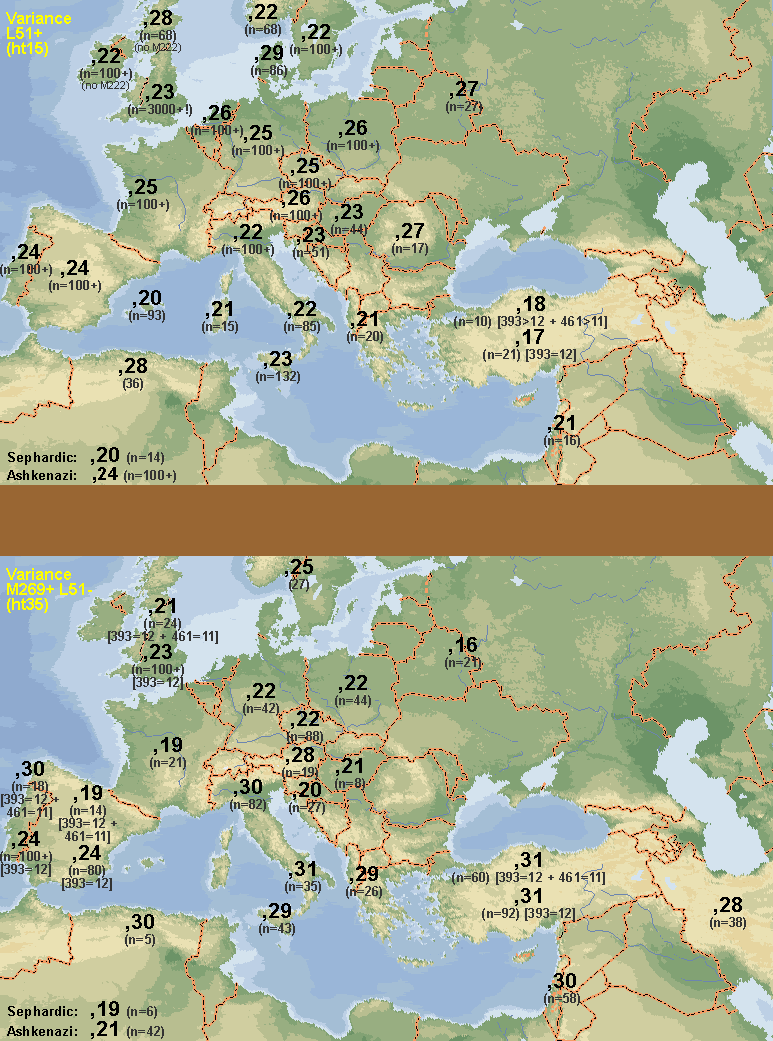
These two maps represent the haplotype diversity of R1b1b2a1 (ht15) and R1b1b2* (ht35) respectively:

Click to expand

Aargiedude's own observations at Dienekes' blog follow:

I've finished estimating ht15 and ht35 diversity, it's taken me 2 days to do this, and I think the results are amazing. The diversity clines of ht15 and ht35 are almost polar opposites. I think these results seriously call into question the conclusion of the Balaresque study, which is what prompted me to look into this. There's no surfing-on-an-expanding-wave phenomenon occuring with ht15. It has its lowest variance in the supposed origination point: Anatolia.

Instead, as Maju pointed out brilliantly, the study's tree diagram of their R1b1b2 haplotypes seems the result of 2 separate events, not a single wave diffusion. And he was absolutely right.

The diversity of ht35 doesn't form a gradually decreasing cline. It seems to be uniformly similar from Iran to west Iberia, or at least up to Italy, because there are issues with the validity of the North African and Iberian data (small sample size in one case and confusion with ht15 samples, in the other). Its cline seems to be more north-south than diagonally from southwest to northeast. East European countries have the same ht35 diversity as West Europe, with the special consideration of the west Iberian results.

Some technical details to keep in mind. Ht15 can be differentiated from ht35 by barely 2 markers: 393 and 461. Few studies test 461, so most of the samples I used were chosen on the basis of 393 alone. But about 3% of ht15 and 10% of ht35 have the "wrong" value, becoming confused with the other group. This usually doesn't matter, exceot in countries where there is an overwhelming ratio difference between the frequencies of both groups, such as in Iberia, France, Britain, Netherlands, Anatolia, and the Levant. In these extreme cases, I've included, where possible, 2 pair of results. The top pair uses samples predicted as narrowly as possible, by using both 393 and 461. The bottom pair is the standard prediction using just 393. The top pair should be more accurate, but they tend to lack in sample size, so then again, maybe not. Notice in the case of Iberia, that the less restrictive result changes drastically from the more restrictive result, and results in identical values to Iberia's ht15 diversity estimate, suggesting most of the samples are in fact ht15 samples that are being confused for ht35 because they had a mutation in 393 to the modal value of ht35 on that marker. Curiously, this didn't happen in France, where I was only able to use the less accurate method (393 alone), and yet the result is notably low and different from France's ht15 diversity. I'd seriously take North Africa's high ht35 result (0,30) with a military-issue teaspoon of salt, it's just 5 samples. On the other hand, it's notoriously high ht15 diversity (0,28) is pretty solid.

To recap, Baralesque and all geneticists are stuck in a time warp, they're back in 2003, thinking R1b is just R1b. What a waste, after going through all the effort of collecting and processing the samples, to not have had the sense to test for a few extra key mutations that define some major subdivisions of R1b1b2 and are well known for more than 5 years. The conclusions they reached would then have been very different.

The Balaresque paper was discussed at Leherensuge a few days ago.

Wednesday, January 20, 2010

R1b1b2a1: Neolithic or what?


I found at Dienekes the reference of a new paper on R1b1b2, focused on demonstrating (quite forcibly) that the lineage is Neolithic and not Paleolithic. Dienekes is, of course, happy that they chose to use his favorite (but rather disliked in the field) molecular clock methodology: the one based on the pedigree mutation rate, which make all haplogroups look extremely recent.

Patricia Balaresque et al. A Predominantly Neolithic Origin for European Paternal Haplogroups. PLoS Biology 2010. Open access. I'm provding a link to PubMed Central because at the time of writing this the original link remained broken.

I am not really happy: the pedigree rate can't be used for ages older than 5000 years (and all dates reported in this paper are clearly older) and, anyhow, the highly hypothetical molecular clock methodologies are anything but helpful when they become the main theme of a "research" paper.

I am not happy either because instead of using the already known SNP-based phylogeny of the haplogroup, they choose to treat the whole haplogroup as a single amorphous clade, when it is clearly structured. This isn't very helpful either.

Finally I am not happy either because they treat (again) the process of Neolithic spread in Europe as a single phenomenon, when it is in fact a complex array of various cultures, notably two different main vectors: one via the Morava-Danube and another via the Mediterranean coast. Both with origins not in Anatolia directly but in the Balcans. They ignore all these archaeological facts rather insultingly.

However for those who like to dig in the raw data, instead of just jumping to the too often biased and misleading conclusions, the paper still has some interest.

Notably I found figure 3 (haplotype structure) quite interesting. Here you have it with a crucial annotation for better understanding:

Click to expand

The crucial annotation is of course marking (with a dark red line) what is not part of R1b1b2a1, which is, as you can see a single branch of the star-like structure, but, unlike the others, is clearly not part of the fundamentally European haplogroup R1b1b2a1. Part of it is at the root of R1b1b2 and R1b1b2a but the rest of sub-branches must be derived, representing a distinct process centered in Turkey and nearby areas.

I dwelt on this matter in a previous post, so I'm not going to go all over it again here. Just for a quick reference a copy of the graph I posted then, showing major haplotypes and their relation with the various layers of the haplogroup:

Click to expand. Based on Alonso-2005.
DYS are 19-390-391-392-393.

As you can easily see most of the Turkish diversity belongs to the R1b1b2(xR1b1b2a1) part of the haplogroup structure. And sure I don't doubt that Anatolia or somewhere nearby is at the ultimate origin of R1b1b2. But there is a sharp distinction between that and what we find in Europe, which almost exclusively belongs to R1b1b2a1, a very specific sublineage.

And a sublineage that is very much ramified in a star-like structure, implying rapid demic expansion. When? That is not really the crucial issue as I see it. "Where?" should be the first question and a question that no paper has yet dealt with from the viewpoint of R1b1b2a1 on its own right.

In the past the lack of knowledge of the structure of the haplogroup may have served as excuse but not anymore. In fact any self-respecting geneticist should look at that SNP-based structure before dealing with STR-based haplotypes and take good notice of the distinctions.

And, if not, why not to include R1b1b1 (Central Asian) or even R1b1a (Italy and Africa mostly) and other R1b*? It is an arbitrary choice, poorly justified.

But, well, what do we get from this data set after we scrap off the extreme bias? For those who enjoy dealing with haplotypes in detail there is a long list in the supplementary material, which duly processed may provide very useful information.

I have not the time nor the resources to do that, so I have done something much simpler but also very informative: count the haplotypes by region as defined in figure 3 (above). Sadly France (incl. Basques), Germany, Netherlands, Denmark, England (incl. Cornwall) and Ireland are all dumped together in the category "other" ("West Europe" hereafter). Unlike the authors I do make the important distinction of what is R1b1b2a1 and what is not.

Follows the number of haplotypes by region and phylogenetic category (manual count so subject to minor error maybe):

R1b1b2(xR1b1b2a1):
  • Turkey: 37
  • West Europe: 20
  • Iberia: 8
  • Balcans: 2
  • Italy: none
R1b1b2a1:
  • West Europe: 198
  • Iberia: 90
  • Turkey: 13
  • Italy: 11
  • Balcans: 6
What does this say? That even between perfectly comparable regions such as Turkey, Italy and Iberia, the highest diversity for R1b1b2a1 is in the West. If you look again at figure 3 you'll notice that most Turkish haplotypes of this clade are derived from European ones, what implies back-migration after the formation and spread of R1b1b2a1, which must have happened in Western or Central Europe.

When did this happen? I am not sure but I have some things clear:

The structure of R1b1b2 does not correspond at all with what one would expect from a demic spread from the Balcans (not Anatolia directly) through two clearly distinct pathways, one to the Danube and Central Europe and the other through Italy to SE France and Iberia. Neither the Balcans nor Italy look particularly central nor we see two differentiated founder effects but only one.

Also the distribution of R1b1b2a1 in a cline that is, as the authors of this paper shamelessly admit, totally the inverse of what one could expect of a demic spread from SE Europe.

The structure of R1b1b2a1 in fact strongly suggests a spread from somewhere in the region described as "Other" and or Iberia, i.e. in Magdalenian Europe. This is in full agreement with the generally accepted theory that R1b1b2a1 spread from the Franco Cantabrian region after the Last Glacial Maximum, along with Magdalenian culture. It could have other explanations (Epipaleolithic flows, older Upper Paleolithic cultural dispersals like Gravettian or Aurignacian) but it just cannot fit within a Neolithic frame. No way!

How did it back-migrate to Anatolia? Possibly with the people who carried the rock art fashion to southern Turkey (Beldibi), which may have an offshoot also at Egypt, where some R1b1b2 is also found, as well as related haplogroup R1b1a. The exact process is still somewhat uncertain anyhow.

Sadly enough the authors have missed an opportunity to analyze the regional structure of this haplogroup in Europe. Hopefully someone else will eventually do it, helping to clarify the matter. The raw data is anyhow there for whoever wants to do it.


Update: a much more realistic geographic analysis of the diversity at the two different phylogenetic levels (by Aargiedude) can be found at this new post.

Friday, December 11, 2009

Intriguing ring structures being researched in Portugal


There seems to be several of these structures in SW Iberia but many are under urbanized areas. However the one at Perdigoes (Reguengos de Monsaraz) is not and is hence being researched by the University of Malaga.


They are made up of concentric ditches that, for what has been discovered so far, were created sequentially, with the ones at the interior being filled when the exterior ones were dug. The different texture of the fillings, which retain water better, allows for these to be seen in air photographs after rains (photo below).


In Perdigoes, the interior (oldest) rings seem to be dated to the second half of the fourth milennium (c. 3500-3000 BCE), while the most recent are from well into the third milennium. They have found varied stuff in them, including human and animal remains.

We believe that these were spaces that hosted scattered groups for ceremonial purposes such as marriages or funerals. When these ceremonies were over, they made the enclosure to disappear, throwing everything into the ditches.


Source: Terra Antiquae (in Spanish). It also includes a link to a PDF (also in Spanish) on the maybe related mysterious and ubiquitous Chalcolithic silos/wells of this area, which are argued to be local manifestations of more widespread practices of the Megalithic area. See also this news item (ADN, in Spanish too).

Wednesday, December 9, 2009

Agriculture spread through cultural diffussion in SW USA


This should not be really surprising to those who have read for instance George Catlin's diary, who reports seasonal use of green maize as complement to an otherwise hunter diet among the Mandan (a people from further north anyhow). Some peoples in the early stages of transition to agriculture may have adopted only certain, more profitable aspects of the new technology, making a slow transition.


William R. Merrill et al., The diffusion of maize to the southwestern United States and its impact. PNAS 2009. Not open access yet, news article at Science Daily anyhow.

The authors conclude that the American staple crop was passed from forager group to forager group through the Southwest of the USA (Texas, etc.) and has no relation with the spread of Uto-Aztecan languages, which in fact pre-dates agriculture and was a north to south migration. SW peoples also show a gradual independent transition to making pottery.

Demographics of Central-North European Neolithic


Thanks to a very friendly reader I have got now access to a large host of papers I would not probably have access to otherwise. One of them is
S. Shennan & K. Edinborough, Prehistoric population history: from the Late Glacial to the Late Neolithic in Central and Northern Europe (Journal of Archaeological Science, 2007).

It is a very interesting research that links almost directly with what I wrote these last days on British Neolithic. Like in Collard's paper, they make use of archaeological density and C14 dates to build up an approximate reconstruction of the demographic history of Germany, Poland and Denmark in the Epipaleolithic and Neolithic periods.

I took this graph (fig. 2) and annotated it with references to the various cultures in order to get an improved vision, to make the comparisons more extensive, I also added Collard's graph for Britain (notice that Collard uses calBP, i.e. "years ago", while Shennan and Edinborough use BCE dates). The result is as follows (click to expand):


I used a color key: yellow-orange for Danubian cultures, red for Nordic cultures and blue for Kurgan cultures. All marked cultures are Neolithic (or Chalcolithic). The reference dates have been taken as carefully as possible from The Comparative Archaeology Web (a great site) and Wikipedia.


Early Neolithic rise and fall

My reader called my attention on the presence of a sharp peak similar to that found in Britain for Central European early Neolithic. There are some differences and they belong to very different periods (separated by almost 2000 years) but there is certainly a marked similitude (they are also similar in that they are both the first local farming cultures and that they both seem to be originated in migrations, although within very different cultural frames). I was suggested that maybe an epidemic caused it but I find that mass destruction epidemics like the Black Death are not known to destroy more than half the population and are certainly followed by a demic recovery soon afterwards. Also I'm too materialist to think than anything but economic reasons would have caused such abrupt decline.

What economic reasons? Of course, there might be climatic reasons: an increase in cold would surely cause a sharp decline but notice that, while continental farmers seem to have all suffered more or less sharp decline since 5000 CE, British hunter-gatherers seem mostly unaffected. In turn, the British Neolithic demic collapse has some less dramatic parallels in the continent (except Germany) but they are much less destructive. I would not totally discard hence that epidemics or cold periods might have helped in these Early Neolithic decays but there must be something else.

The key in this phenomenon (assuming it is no artifact) seems to be the fact that they are both immigrant cultures and the first Neolithic phenomenon locally. So I am considering that their practices were not sustainable and that in few centuries they may have destroyed the very ecological foundations of their initially buoyant economy. Slash-and-burn farming can be the key to a rapid success but also to a slower destruction of the environment that unavoidably has consequences in the long run. The fact that they were immigrant peoples, with imported crops and techniques, and largely ignorant initially of the local ecology, can only have helped to this lack of perspective and their eventual (partial) failure.

A partial exception in this picture is Denmark: this country appears, ironically, to have been more populated in the Epipaleolithic (fishing-based economy, which is quite productive) than in all the Neolithic prior to Funnelbeaker (TRBK) and Megalithism. There is nevertheless a decline around the same period as happened in Central Europe, but is not nearly as sharp.


Middle/Late Neolithic lows, Chalcolithic ups and downs

There are more interesting analysis to develop from this graph.

One is that the bottom of Germany's Neolithic population reached apparently a lowest point (not significantly higher than in the Late Epipaleolithic) with Rössen culture (Danubian regional development) and did not really recover until deep in the Chalcolithic in the Globular Amporae to Corded Ware transition, at the beginning of idoeuropeization (except for East Germany, which is much older - Baalberge). However Germany is large and was fragmented in many regional groups (some within TRBK too, not marked for this country), specially as time passed, so take this with some caution if you want take a more local perspective.

Quite similar is the case for Poland, though the recovery arrived earlier, again coincident more or less with Indeuropeization. But notice that the recovery belongs rather to the early Baden culture period (marked outside the graph in dark yellow), which barely reached Poland as such but did influence these early West Indoeuropeans into a process of some cultural "Danubization", which seems was beneficial.

But Denmark is the area that experienced an earliest and more sustained recovery with Funelbeaker culture and Megalithism. There is some decline by the end of this period (why?) and then a recovery with the Corded Ware (Indoeuropeization), which could well mean a colonization.


Indoeuropean decay

In all Indoeuropeanized areas (Central Europe, Denmark) there is a sustained decline after Corded Ware, that largely correlates with the complex Bell Beaker phenomenon (that I interpret as a trade network or multinational guild - it is not a true culture in any case but in most places a minority phenomenon).

However this is not the case in Britain, where this period corresponds to either a demographic plateau (without monuments) or a period of marked growth (with monuments). It is certainly a golden age for the Atlantic peoples (pre-Indoeuropean) for what I know of other contexts, when the first West European civilzations rise in Iberia, one of them even becoming temporarily the main center of the Bell Beaker trade network, and when mariner trade across the Atlantic (and Mediterranean) seems to be very high. It is therefore likely that the demographic decline of Indoeuropeans has no parallel but rather an opposite in the pre-Indoeuropean Atlantic cultural area, still Megalithic for a long time.


Update (Dec 10): take a look at this climate reconstruction graph:


It would seem maybe that some of the more marked demic peaks could be coincident with some similar peaks in the average temperatures. Notably there was one after 6000 BP, coincident with the farmers' colonization of Britain and the great increase of population in Denmark, and another one at 8000 BP, coincident with the Danubian expansion. But otherwise the parallels are hard to find, so I still think that climatic fluctuations were only a co-factor and not the main driver of demographics.