
New blogs

Leherensuge was replaced in October 2010 by two new blogs: For what they were... we are and For what we are... they will be. Check them out.
Showing posts with label Eurasia. Show all posts

Wednesday, September 29, 2010

Hyenas another european mammal extinct at the end of the last ice age


Spanish researchers have published a new paper on the extinction of spotted hyenas (Crocuta crocuta, the same species dominant in Africa) in Europe and Asia. Apparently hyenas lived without much trouble in the Mediterranean areas of Eurasia until c. 10,000 years ago, when they became extinct. This is also the time of the end of the last Ice Age.

Lead researcher Sara Varela says that climate change in the past was not directly responsible for the extinction of the spotted hyena in southern Europe, but it was a factor in its disappearance.

Source: Science Daily, illustration from Wikipedia.


Wednesday, August 18, 2010

Mammoths died off because of forest expansion


That is the conclusion reached by Brian Huntley and colleagues of Durham University, UK, as reported by BBC (sorry but I cannot find a more direct reference at this time).

According to the British scientists, after running several models for the extinction of mammoth and other megafauna of the Ice Age, the model that is most plausible is that they went extinct because of loss of grasslands and not human hunters' pressure.

During the height of the ice age, mammoths and other large herbivores would have had more food to eat. But as we shifted into the post-glacial stage, trees gradually displaced those herbaceous ecosystems and that much reduced their grazing area.

Update (Aug 19):

Found the relevant paper:

Judy R. M. Allen et al., Last glacial vegetation of northern Eurasia. Quaternary Science Reviews, 2010. Pay per view.

There is also an alternative news article at Science Daily (typically a literal transcription from the press release) that uses maybe less absolute terms than the BBC one:

The change from productive grasslands across large areas of northern Eurasia, Alaska and Yukon to less productive tundra-like habitats had a huge effect on many species, particularly on the large herbivores like the woolly rhinoceros and woolly mammoth. Mammoths and other mega-mammals found it increasingly difficult to find food. We believe that the loss of food supplies from productive grasslands was the major contributing factor to the extinction of these mega-mammals.

Saturday, July 3, 2010

Central Eurasian genetic specifity detected


Found at
Dienekes and GNXP:

Hui Li et al., Genetic Landscape of Eurasia and “Admixture” in Uyghurs. AJHG 2009. Now freely available at PubMed.

The interesting stuff is in figure 1:


So we have now a cluster centered at the Khanty (an East Uralic population) but strong in Central Asians that is distinct from both West and East Eurasians.

I think this is the coolest discovery of autosomal genetics in quite a long time.

Dienekes protests about the inconsistence of this with Y-DNA but I fail to see the connection, because Y-DNA or even mtDNA, surely scattered in the early Upper Paleolithic when Eurasians were still very much undifferentiated, while these components are surely shallower and represent regional homogeneization processes that happened surely only after the LGM. Also the impact of Y-DNA flows may be really weak: Buriats and Finns share Y-DNA lineage, as do Polish and many Indians or West Europeans and some Central Africans but it's obvious that these don't correlate too well with autosomal genetic clustering which has its own processes of regional homogeneization, while haploid genetics and specially Y-DNA is subject to high odds of fixation by mere drift and founder effects.

Razib says that the authors seem to be arguing for greater number of (strategically chosen?) populations, what makes total sense and has served, when done, to add many shades to the tricomy of the old HapMap continental hyper-simplification.

However it's very possible that a deeper cluster analysis would have revealed futher clusters, maybe an Indian one (very small sample though) or a distinction between the Khanty and Central Asians or...

Where does this Central Eurasian cluster stem from. I'd say, based on haploid genetics, that it was probably created by the admixture of a West Eurasian and East Eurasian migration converging in that peripheral area and then coalescing into a rather homogeneous cluster on its own right. That would explain why the population appears almost exactly intermediate between the two major continental groups and also why there is no haploid lineage that specifically belongs to that region (all are shared with either West Eurasia or East Asia).

East Asian variations

It is noticeable that three quite distinct populations emerge in East Asia: inland, coastal and south. These are probably essentially comparable with the blue, yellow and one (or all together) of the SE Asian components detected in the HUGO Consortium paper.

Monday, May 10, 2010

New paper on Y-DNA haplogroup C


Natsuya points me to this new paper on the distribution and likely spread of Y-DNA haplogroup C, with special focus on East Asia and subhaplogroup C3.


Hua Zhong et al. Global distribution of Y-chromosome haplogroup C reveals the prehistoric migration routes of African exodus and early settlement in East Asia. Journal of Human Genetics 2010. Pay per view (but you can read it freely at ZohoViewer).

CONCLUSIONS
We demonstrated the phylogeographic distribution of one of the most ancient non-African Y-chromosome lineages, from which we inferred the prehistoric migration and expansion of the Hg C lineage. We propose that Hg C was derived from the African exodus and gradually colonized South Asia, Southeast Asia, Oceania and East Asia by a single Paleolithic migration from Africa to Asia and Oceania, which occurred more than 40KYA. The prehistoric northward migration of Hg C in mainland East Asia likely followed the coastline and is consistent with the northward migration of other East Asian Y-chromosome haplogroups.
Nothing too new as you can see, however the the data detail and the neighbor-joining trees of haplotypes for C3 and C5 are of some interest, suggesting that C3 probably coalesced a Mid-East Asia (China and surroundings) rather than SE or NE Asia.

C6 was not located anywhere, suggesting that it's just a very minor clade. In contrast South Asian specific C5 was detected among 2.5% of Indians and 1.5% of Southern Pakistanis, reminiscent of a back-migration from SE Asia by the same "coastal route" that was used to reach SE Asia at an earlier moment.

It's interesting also the still rather high amount of undefined C* found in various areas: 4.6% in Philippines, 5.6% in East Indonesia, 5.9% in Micronesia, 5.6% in Australian Aborigines, 9.1% among the Mulau of Guangxi, 6.9 among the Shui of Guizhou, 7.6 among the Yao of Guangxi, 7.7 among the Tujia of Hubei, 8.2 among the Hui of Ningxia and 6.7 among the Hezhe of Heilojiang. It is also potentially interesting the 0.5% in India because it might have greater densities in some of its very diverse populations (but it's treated as a single homogenous sample in this paper).

Sunday, May 9, 2010

On some details of the Neanderthal genome draft


Still chewing on the Neanderthal genome draft (
Green 2010). Only today I have got some time to dwell on some of its details.


Alleles specific to all Homo sapiens (and not to Neanderthals)

It's interesting not just that some of us carry a small apportion of Neanderthal alleles but also the list of alleles that are exclusive of our species. Green et al. dwell on this matter in the section titled A catalog of features unique to the human genome.

There is a list of 78 alleles (table 2) that are fixated in the derived (non-Chimpanzee) form in the species Homo sapiens exclusively and found in their ancestral state among Neanderthals. Many are not really known their role but others seem to accumulate in certain processes such as skin (sweat...), melanin, smell, vision, sperm motility, hormonal and cellular division regulatory processes. This suggests me that there were some marked biological and appearence differences among the two species in spite of the proximity.

Therefore the inter-species barrier was possibly rather high even if still not total.

The authors emphasize specially five alleles in which more than one SNP is different, suggesting greater differences. These are specially related to skin morphology and regulatory substitutions (specificity).

Also the studied certain regions in clear rapid evolutionary change in the line leading to humans called HARs. The vast majority of these HARs had already evolved before the Neanderthal-Sapiens transition but a few (c. 1.7%) had not yet and belong specifically to Homo sapiens.

These human-specific HARs include genes related to mental functions (associated with mental disorders such as Dow syndrome, schizophrenia and autism) as well as a the RUNX2 (CBFA1) gene that would be related to changes in skull, clavicle and ribcage morphology.


Are Chinese slightly 'more Neanderthal' than other Eurasians?

Less definitely, when working with the comparative data at table 4, I find that the Han Chinese sample (n=2) appears very slightly but maybe significantly "more Neanderthal" than the other Eurasians, including the only Japanese. The Chinese individuals differ from the African sample in Neanderthal alleles by an average factor of 5.05 (4.95 and 5.15), while the non-Han Eurasian average is 4.21 (3.93-4.65), that is: almost a point more. Only one European individual (4.65) really approaches the Han Chinese figures, which differ by almost a whole point (0.92) from the rest.


This, of course, can only be a very preliminary indication but it does seem intriguing and potentially meaningful. The fact that the greatest difference is with the, otherwise very close, Japanese could even point to some greater diversity patterns in East Eurasia in regard to Neanderthal genes in us, and, considering the tiny sample sizes, even in much of the rest of Eurasia.

Some experts' opinions on the Neanderthal genome's implications


From Quo magazine (in Spanish). Translated some sentences here:

J.L. Arsuaga, co-Director of Atapuerca archaeological site: These are only some some results and we will have to wait. It is a contribution in some humans of just some 2%, what would not be really relevant.

C. Lalueza Fox, member of the research team of El Sidrón cave: This year we will see published the Thousand Genomes' Project, that aims to sequence a thousand human genomes, and will be interesting to see if the percentage of Neanderthal genes is kept, in which frequency, in which populations.

Jordi Agustí, member of the research team of Dmanisi site: It does not fundamentally invalidates what was believed so far: that they were different or almost different species.

E. Baquedano, member of the research team of Pinilla del Valle site: We will have to admit that Humans and Neanderthals belong to a single species even if they are distinct subspecies.

In the same magazine but a separate interview, anthropologist Erik Trinkaus, defends his theory on admixture in Europe some 40,000 years ago only and is disdainful of the use of aDNA and the comparison of a "pathetic" sample of just 3 Neanderthal individuals with just "five modern humans" (sic, actually it's five modern human populations comprising 12 individuals). He refers us to his 2007 anatomical paper.

Exploring the Neanderthal admixture episode (1)


I
mentioned the other day that a small amount of Neanderthal genes have been detected among non-African modern humans in a homogeneous way that strongly suggests it happened only within the process of migration into Eurasia and beyond.

The percentage of Neanderthal "blood" in non-Africans is estimated in 1-4% (average: 2.5%) what means the equivalent to one great-great-great-grandparent (3.13%) or great-great-great-great-grandparent (1.56%). In other words: the equivalent to one of 32-64 ancestors.

The homogeneity of the apportion across people of Eurasian ancestry (includes Oceanian and American natives) tells us that this was the situation in the Migrant Population at the arrival to South Asia, where it expanded very dynamically.

We must understand that, due to various environmental reasons (adaptation to warm climate, arid barriers and Neanderthal pressure) the Migrant Population must have been rather small between Africa and South Asia. At least that's what the genetic signature strongly suggests. However it was not too small or not too homogeneous because several lineages (2-3 at least per gender) arrived to the South Asian secondary cradle (a really small homogeneous population would surely have got its lineages more strictly fixated, i.e. one per gender).

There are many different detailed scenarios that could explain this limited gene flow but the following one is which seems to me as the simplest one on light of the available genetic and archaeological data:


Feel free to discuss, of course, it's very tentative and pretty much open to variants and alternatives.

Why did I get the main migrant population go via South Arabia? Because there are many clues that suggest so but it's again a personal choice: my best hunch.

Why did I place the main admixture event in Palestine? Because there's some archaeological evidence telling of at least contact between both species there c. 130,000 years ago (old stratigraphic date). But could have happened in many other areas of the Middle East, in Iran for instance (in which case, we could consider a single migrating population via South Arabia and consider the Palestinian episode genetically unproductive).

Just trying to figure out...

Thursday, May 6, 2010

Neanderthal gene flow found in humans


Finally an aperitif from the so much expected Neanderthal genome. We will still have to wait for the other specimens from several parts of Europe but the three individuals of Vindija (Croatia) have already been sequenced and provide some interesting information.


Richard E. Green et al., A Draft Sequence of the Neanderthal Genome. Science Magazine 2010. Open access.

Abstract

Neandertals, the closest evolutionary relatives of present-day humans, lived in large parts of Europe and western Asia before disappearing 30,000 years ago. We present a draft sequence of the Neandertal genome composed of more than 4 billion nucleotides from three individuals. Comparisons of the Neandertal genome to the genomes of five present-day humans from different parts of the world identify a number of genomic regions that may have been affected by positive selection in ancestral modern humans, including genes involved in metabolism and in cognitive and skeletal development. We show that Neandertals shared more genetic variants with present-day humans in Eurasia than with present-day humans in sub-Saharan Africa, suggesting that gene flow from Neandertals into the ancestors of non-Africans occurred before the divergence of Eurasian groups from each other.

Related materials (all open access) can be found at Special Feature: The Neanderthal Genome, also at Science Magazine.

The authors estimate that this gene flow is quantified in 1-4% of the Eurasian genome and this is the same for West Eurasians, East Asians or Papuans but not for the Yoruba nor the San. This means that, most likely, there was gene flow between the two species soon after the Out of Africa migration.

More later maybe. This is just a quick heads up.

Sunday, March 7, 2010

Indonesian Y-DNA is mostly Paleolithic


Found
at Dienekes'.

Tatiana M. Karafet et al., Major East-West Division Underlies Y Chromosome Stratification Across Indonesia. MBE 2010. Pay per view.

While I don't have at the moment access to this surely interesting paper and hence to the likely substantial details, the abstract sounds highly interesting:

The early history of Island Southeast Asia is often characterized as the story of two major population dispersals: the initial Paleolithic colonization of Sahul ~45 thousand years ago and the much later Neolithic expansion of Austronesian-speaking farmers ~4,000 years ago. Here, in the largest survey of Indonesian Y chromosomes to date, we present evidence for multiple genetic strata that likely arose through a series of distinct migratory processes. We genotype an extensive battery of Y chromosome markers, including 85 SNPs/indels and 12 Y-STRs, in a sample of 1,917 men from 32 communities located across Indonesia. We find that the paternal gene pool is sharply subdivided between western and eastern locations, with a boundary running between the islands of Bali and Flores. Analysis of molecular variance reveals one of the highest levels of between-group variance yet reported for human Y chromosome data (e.g., ?ST = 0.47). Eastern Y chromosome haplogroups are closely related to Melanesian lineages (i.e., within the C, M and S subclades) and likely reflect the initial wave of colonization of the region, while the majority of western Y chromosomes (i.e., O-M119*, O-P203, and O-M95*) are related to haplogroups that may have entered Indonesia during the Paleolithic from mainland Asia. In addition, two novel markers (P201, P203) provide significantly enhanced phylogenetic resolution of two key haplogroups (O-M122, O-M119) that are often associated with the Austronesian expansion. This more refined picture leads us to put forward a four-phase colonization model in which Paleolithic migrations of hunter-gatherers shape the primary structure of current Indonesian Y chromosome diversity, and Neolithic incursions make only a minor impact on the paternal gene pool, despite the large cultural impact of the Austronesian expansion.

Bad news in any case for the Neolithicists, again confirmation for the Paleolithicists like myself. This in a context like SE Asia where it's been argued more than anywhere else in favor of a massive population replacement in Neolithic times (based on craniometric data mostly). It seems it was not the case after all.

I wonder how does Karafet and colleagues treat the issue of the proposed MNOPS macro-haplogroup downstream of K, or if just limit themselves to describe the sublineages (such as M, S and O) regardless of upstream affiliation.

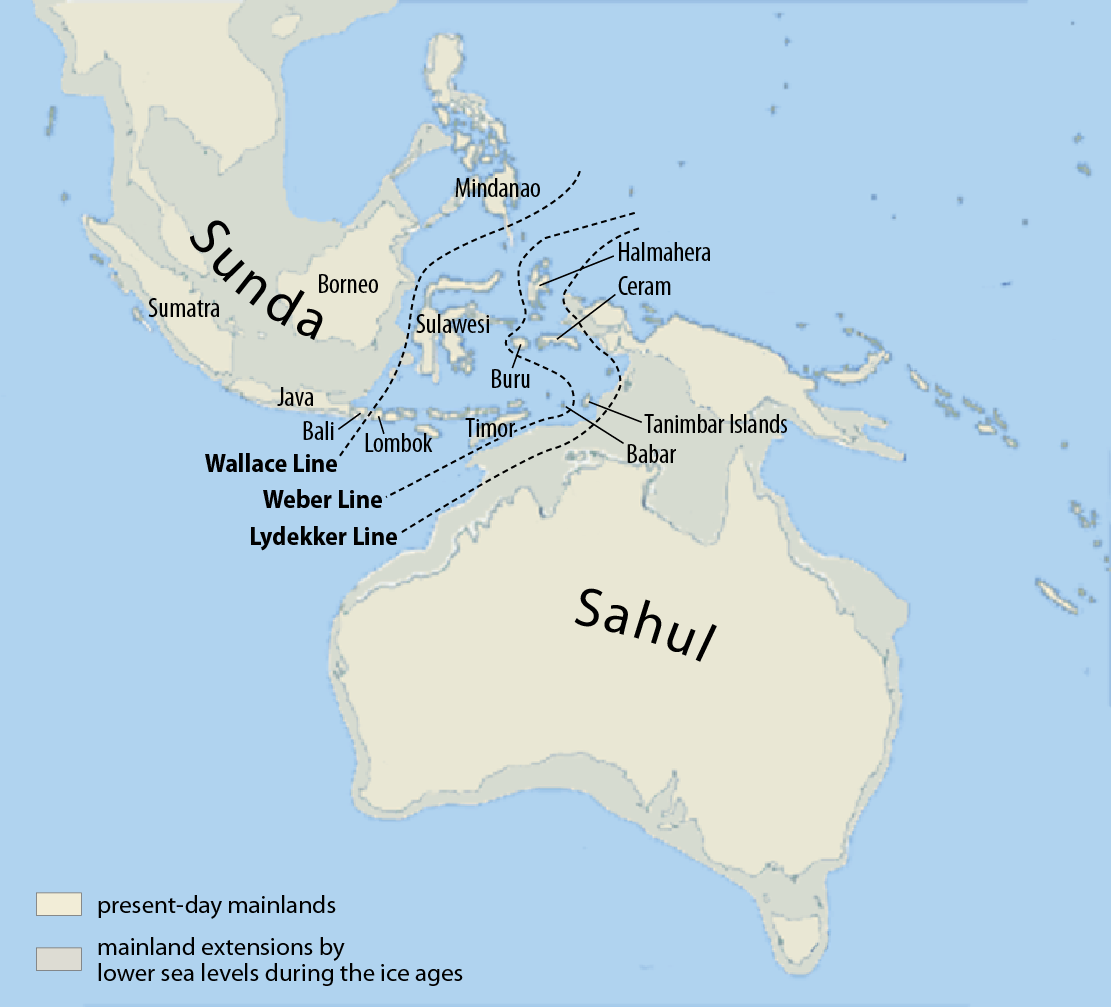
Notice that the discovered divide goes exactly along Wallace line, a major ecological divide, which exists because the continent reached in the Ice Age, when sea levels were much lower, as far East as Bali and Borneo, while the islands east of that line remained separated.


Understanding the ecological divide at Indonesia (from Wikipedia)

This divide only makes sense if navigation was limited at the time and makes no sense whatsoever if one wants to explain it within the context of Austronesian expansion, because for these formidable oceangoing sailors, who colonized as far as Hawaii, Easter Island and Madagascar, such barrier would have never been any obstacle at all.


Update (March 10):

I got a copy of the paper (thanks to Argiedude again) and the four phases proposed are as follows:
  1. Early colonization reaching to Sahul. Lineages: C*, K*, C2, M and S. Dated to c. 45 Ka ago.
  2. Second flow affecting only Sundaland. Lineages: O1a1, O2a, O3(xO3a3) and O1a. Dated to 30-15 Ka.
  3. Austronesian colonization. Lineages: O1a2 and O3a3(xO3a3b). Dated to 4-3 Ka.
  4. Late arrivals from India, West Asia and China. Lineages: H, L, J and O3a3b.

Of course, the dates attached to the two Paleolithic phases are to be taken with some caution.

Some F* (East Indonesia) and R (West Indonesia) were also detected and should be associated to phases 1 and 4 respectively.

The remnants of the first phase are found particularly in East Indonesia, Melanesia, Polynesia (as partial genetic extension of Melanesia) and Philippines, where K* still constitutes almost 50% of Y-DNA. There's also some C* and K* in West Indonesia (and notably, different source, some 25% K* among the Orang Asli of peninsular Malaysia) but it's much more patchy and diluted.

Of the second phase, I'd read that O2a and O3 are arrivals from mainland SE Asia but that O1 may have coalesced at Sundaland and flowed northwards to as far as Taiwan, where O1a2 constitutes some 90% of the Aboriginal Y-DNA, being the main haplogroup that can be directly linked to the Austronesian expansion in phase 3.

___________

Addendum (March 12): map by Argiedude showing the frequencies of the lineages belonging to the first colonization wave of Karafet, here described as "Australasian lineages" and also showing current distribution of Austronesian and Papuan languages (the latter a paraphyletic group):


_________________

Important update (Mar 14): rare H and J lineages:

Thanks to the keen eye of Ebizur and Argiedude (see the discussion here and at Dienekes' blog), two rare Y-DNA lineages have been spotted in the Karafet samples: these are H(xH1,H2) and J(xJ1,J2).

H(xH1,H2) is found in Bali (17/641 = 2.65%) along with some H1 and H2 (one case of each). This paragroup seems rare even in India.

J(xJ1,J2) is found in Bali too (2/641 = 0.3%) along with some J1 (6/641) and J2b (4/641). It is also found in Vietnam (1/70 = 1.4%), along with some J2(xJ2b) (1/70), this last one also found in Java, Sulawesi, Vanuatu and Han Chinese. J* is, according to Argiedude not really found anywhere else.

Someone by the name Finn uploaded the paper and supplements at Zoho Viewer and you can (at least by the moment), find them at these links: main, PDF supp, XLS supp.

_____________

Update July 3: Natsuya has got some further details via private communication with Tatiana Karafet. Specifically the distribution of haplogroups among the four different Han samples and STR haplotype sequences for O3b3b-M7. LINK.


Monday, March 1, 2010

Are we overlooking the signature of the Out of Africa?


In my recent review of mtDNA L(xM,N), following mostly
Behar 2008, I noticed that some of those lineages have distributions that either partly or totally do not seem to correspond with Africa South of the Sahara, but clearly penetrate since old times into West Asia, North Africa or both.

So I wonder: aren't some of them remnants of the migration Out of Africa, which never really made it to South Asia?

Let's see. The mutation count between "mitochondrial Eve" and the L3 node is of 23 (coding region only), to M is of 26 and to N of 28. This is roughly the "time frame" of the Out of Africa. By the "time" of 30 CR mutations the backflow of Eurasian mtDNA to West Asia was already beginning (mostly in form of R derivatives but also M1 and N1, and later some other N subclades too) and this became a clearly dominant flow. Also since M1 specially, scattered into East Africa, it's possible that there was a second flow from Africa in that period of colonization of West Asia that was, no doubt, coincident with the early Mousterian Puvial, when the region became less arid.

I find that the following lineages, normally tagged as "African", should have been involved in the Out of Africa episode:

L4b: at 24 mutations appears to have almost the same age as L3. It has two basal lineages: L4b1, which is only found in Yemen, and L4b2, typical of the Hadza and Sandawe, and found also among Ethiopians (with offshoots in Southern Africa and Arabia) and the Lisango of DR Congo and/or CAR.

L0f2: at 24 CR mutations looks only slightly younger than L3 and surely older than M. One of its sublineages (L0f2a) is only found at Oman, while the other is at Ethiopia (L0f2b).

L0a1b: at 26 CR mutations should have the same age as M. One of its sublineages is only found in Arabia Peninsula (L0a1b2), while the other is shared between Morocco and Southern Africa (L0a1b1).

L5c: at 28 CR mutations appears to be as old as N. One of its sublineages is found at Egypt (L5c2) and the other at Ethiopia (L5c1).

L3e2: at 29 CR mutations appears of the same age as R. L3e2a is shared by West and North Africa, while L3e2b has two lineages that are only found in Jordan (one of the L3e2b*) and Oman and Egypt (L3e2b2).

L6 shows 38 mutations, however the root of its very long stem is necessarily older than L3 (as it's the oldest branch of L3'4'6). Today it looks like Yemen harbors the highest diversity, with offshoots at Ethiopia and Egypt.

There are others but seem younger than the 30 mutations that I decided as limit and may represent other flows, maybe related to the arrival of M1 to East Africa.

It's quite striking, to say the least, that these lineages have been overlooked, they really appear to my eyes as participants of the OoA at a more modest scale, never reaching South Asia or beyond.

Also notice that Yemen and Oman appear insistently in this list. All mentioned lineages, except L5c and possibly L3e2 should represent local fixation processes when people took the coastal route via southern Arabia.


Update (Mar 14): corrected error re. L0f2 (nomenclature and mutation count).

I'd like also to add L3i to the list. It looks to me as centered at coastal Yemen and of similar age (slightly younger, 2 mutations downstream from L3, 25 from "Eve") as M.


Update (Mar 21): Browsing through the East Asian mtDNA data at Tanaka 2004, I just spotted 1/20 (5%) L2 among the Sakai (Semang Negritos) of southern Thailand (Trang province). Not sure what to think but it is odd indeed. Another unlikely survival?


Update (May 5): Map of a plausible Abbassia Pluvial (120-90,000 years ago) Out of Africa migration with the candidate mtDNA lineages to have participated in it (red: L3, purple: other):


Thursday, February 25, 2010

New research may reinforce human continuity through the Toba event in India


Found first
via Anthropology.net but ratified and complemented through search engines on my own.

The international archaeological team lead by Michael Petraglia, Ravi Korisettar and J.N. Pal, seem to be on the path of reinforcing with hard data the theory that humankind would have survived in India through the Toba supervolcano event, c. 74,000 years ago, as reported by Oxford University.

No human remains seem to have been found yet but the data on lithic tools and the remains of other animal species all point to continuity and not the massive destruction that the thick ash layer would have suggested.

All this suggests that the ancestors of Eurasians (and by extension also the native peoples of Oceania and America) were alive and kicking at least 74,000 years ago in India, more than 15,000 years before that the often misleading "genetic clocks" tend to suggest.

In the words of Michael Petraglia:

This exciting new information questions the idea that the Toba super-eruption caused a worldwide environmental catastrophe. That is not to say that there were no ecological effects. We do have evidence that the ash temporarily disrupted vegetative communities and it certainly choked and polluted some fresh water sources, probably causing harm to wildlife and maybe even humans.

See also:
· Petraglia's team website.
· M. Petraglia et al., Middle Paleolithic Assemblages from the Indian Subcontinent Before and After the Toba Super-Eruption. Science 2007.
· James B. Harrod, Synopsis of Paleo-India. OriginsNet.org, 2007 (PDF).

Thursday, February 18, 2010

Paleolithic Europeans did not burn the vegetation as in SE Asia or Australia


While it seems that in SE Asia and Australia newly arrived H. sapiens extensively used fire to transform the landscape since 60-50,000 years ago, this was not the case in Europe, neither by Neanderthals nor our species.


Anne-Laure Daniau et al., Testing the Hypothesis of Fire Use for Ecosystem Management by Neanderthal and Upper Palaeolithic Modern Human Populations. PLoS ONE, 2010. Open access.

Conclusion

Extensive use of fire for ecosystem management was probably a component of the technical package of Modern Humans during their colonisation of Southeast Asia. Our study shows that fire regimes in Western Europe between 70 ka and 10 ka were mainly driven by the D-O millennial-scale climatic variability and its impacts on fuel load. At a macro level at least, the colonisation of Western Europe by Anatomically Modern Humans did not have a detectable impact on fire regimes. This, however, does not mean that Neanderthals and/or Modern Humans did not use fire for ecosystem management but rather that, if this were indeed the case, the impact on the environment of fire use is not detectable in our records, and was certainly not as pronounced as it was in the biomass burning history of Southeast Asia.

Saturday, February 13, 2010

Reconstruction of mtDNA spread in Eurasia (again)


I have been working for some time in yet another attempt of reconstruction of the mtDNA spread in Eurasia, this time focusing only on coding region mutations, because the hyper-variable or control region (also D-loop) is much less reliable. What follows is the result until I got bored of checking the regional adscription of the most rare lineages.

The maps are a plausible sequence of the Eurasian mtDNA spread, based on how many CR mutations separates them from the most common recent ancestor: L3. Each map represents one coding region mutation further away from L3.


1. The M explosion:

Macro-haplogroup M has right now 43 basal sublineages (per PhyloTree), being the largest starlike structure in all humankind. This is the signature of a brutal expansion that probably happened upon the arrival of the first Homo sapiens to South Asia, where this lineage has its highest diversity by far.


2. The M explosion (cont.):

Not only M as such shows clear signs of expansiveness early on, many of its sublineages bi-/multifurcated just after it. Most did in South Asia itself but a handful expanded in Eastern Eurasia (i.e. everything that is East of Bangladesh), reaching already as far as Melanesia and maybe Japan, it seems. It was no doubt the time of the rapid coastal migration.


3. The N explosion:

For centrality and diversity reasons, mainly, I have decided that the only surviving "sister" clade of M probably expanded at SE Asia. I am not 100% sure but makes better sense than other options anyhow. In comparison with the huge starlike structure of M, the one of N is quite modest. It is still pretty large.


I am not sure either that the N explosion only happened this late. I have not been able to properly apportionate all lineages and hence I'm using only the mutation count to the parental node (L3) but the impression exists that, on average, N-derived lineages host more mutations than M-derived ones. So it's possible that the molcular clock has been ticking slightly faster for N than for N (but large starlike lineages within N, like H, are definitively out of this conjectural rule, so I really can't say for sure).

Whatever the case, if the premises are correct, at this third phase, while N explodes, there is still a host of M sublineages (in italic type those that are not basal) showing their own signatures of expansion in Southern and Eastern Eurasia.

Notable maybe are M60 (found in NE India tribes) and M17 (Philippines). It's also notable that at this phase Australia is already being colonized.

4. The R explosion:

If N was said to be "modest", its daughter R would ammend that. Again we are not in front of any massive starlike spread of the type of M (only H approaches such dimensions, R has 16 basal sublineages) but the success of mtDNA R is unusual in spite of that.


At the time of the R "bang", other lineages also show signals of expansion in South Asia, notably M4''64, which already began expanding in the previous phase. In the East, the flow of diverse lineages to Melanesia continues, while the expansion in NE Asia seems to slow down (a signal of a cold period?)

Notice how it is still M the macro-lineage dominating the scene, as N subclades show only scattered signs of expansion, with many just lurking for their opportunity (later).

5. The R explosion (cont.):

As happened with M early on (but unlike N), the explosion of R is followed just one mutation downstream by signatures of expansion of almost half of its basal sublineages. The dynamism is again very strong and it's also geographically, with expansion in all directions: West Asia (having to face the extremely strong Neanderthals, as well as some very arid regions), SE Asia, Melanesia, and of course in South Asia itself.


M sublineages are still expanding and it's notable that the dynamism seems to return to NE Asia and that the first signature of expansion in Andaman islands appears now.

Notice that R2'JT may be considered a West Eurasian lineage: the center of gravity of R2 seems to be at Balochistan, while that of JT is further west. But it doesn't change things too much.

6. Slow down:

I had to stop at some point and I decided to do it here, mostly because nothing too interesting seems to happen anymore. Sure, would I have continued with two more maps, I could have placed the defining nodes of some important lineages like U, H, V, F, X, A or Z. But R9 is already the ancestor of F and the outline of the colonization of West Eurasia and NE Asia has already been visible. Maybe tomorrow (stay tuned for possible updates).

So maybe the most important feature in this map is precisely the signature of expansion of R9, which together with B (see previous map) makes about all East Asian R. This is important in my opinion because I suspect that the expansion of mtDNA R may have been associated in the East with that of Y-DNA MNOPS. It's quite speculative at the moment, I admit, when we still know so little about this newly proposed patrilineage.

(Update: Feb 19) - I just noticed that the expansion D4 and D5 would correspond with this last episode. They are important because D, as D4 after it, have star-like structures: signals of rapid demic expansion.

Thursday, February 11, 2010

Eurasian Y-DNA note


Just a brief working note on my current understanding of Eurasian Y-DNA diffusion and diversification patterns after the out of Africa migration.


I am assuming here that the newly proposed Y-DNA macro-haplogroup MNOPS (downstream of K) is for real and that it includes (for parsimony reasons) haplogroups K2, K3, K4, M, NO, P and S. This is not sure at all but is a quite reasonable possibility.


I used color codes for the main lineages (blue for DE, orange for C and red for F). The pink line represents the main route of the Eurasian migration, the red arrows represent the main flows of F and K derived lineages, which are the most complex ones. The light red dotted ellipse represents the most likely urheimat of F, IJK and K, as well as other derived lineages such as H and P. For simplicity reasons I have not depicted the expansions of C and D, nor of P and NO.

In order to infer the possible homelands of each of the lineages I used common sense, of course, but specially I used the following method: halfway point between the centroid of the lineage and the estimated homeland of upstream clades, when no centroid was available, midpoints between downstream centroids were used. It's notable that Northwest South Asia seems to be the homeland of the most important Eurasian Y-DNA lineages, not just of F but of several major nodes downstream of it (H, IJK, L, K, P, R), however the MNOPS "boomerang" migration, if confirmed, also has its own significance - and not just for Eastern Asia and Oceania. I wonder if this peculiar Y-DNA flow into SE Asia and back into South Asia is related with the flows of mtDNA N and R.

Sunday, January 24, 2010

East Asian alcohol intolerance gene mapped


Yi Peng et al. The ADH1B Arg47His polymorphism in East Asian populations and expansion of rice domestication in history. BMC Evolutionary Biology, 2010. Open access.


The authors have mapped the allele for alcohol intolerance within the gene among Chinese populations, both Han and non-Han (cf. table 1 for frequencies). There are sharp differences among ethnicities with Tibeto-Burman and Austroasiatic nations showing low levels of the allele.

The highest densities of the allele are in the province of Zhejiang, just south of Shanghai, where nearly everybody is alcohol intolerant. The authors have estimated possible ages for the origin and spread of this allele and conclude that it originated and spread with rice agriculture. However I am not fully convinced, as happens with all molecular clock estimates. Whatever the case it does seem reasonable to accept that the seemingly oldest variants of the allele are in Central/South Western China.


Above: map of the alcohol intolerance allele included in the study (notice that the Chinese border is pretty much fictitious, including all claims the PRC may have) with clines of frequency and symbols for different estimated ages.

Notice that if the claim of Neolithic origin and spread of this allele is correct it would frontally clash with the notion that the Mongoloid morphotype spread within this same period. Personally I am pretty much skeptic of both claims. However I can imagine that this allele may have spread along some South to North demic expansion like the one associated to Y-DNA haplogroup O maybe.

Tuesday, December 15, 2009

Novel mtDNA M sublineage found in Madagascar


A new mtDNA M lineage has been detected among a Malagasy fisherman ethnicity: the
Vezo (4/101 = 4%). It's been named M16 and appears to hang directly from the M node. Three other individuals with this lineage have been found among African Americans (though it has not yet been detected in mainland Africa). M16 has also been found in one citizen of Dubai (UAE) and one (1/127 = 0.8%) among the Mikea hunter-gatherers/horticulturalists of SW Madagascar, believed to be a remnant of pre-Austronesian colonization of the island.

Haplogroup M16 is characterized by 11 coding region mutations and 8 control region ones. M16 has two subclades: M16a (found only in one Vezo individual) and M16b (including all other carriers). They estimate (following the new refined method of Soares et al. - but notice that they give a very recent age to the relevant Pan-Homo split: only 6.5 Mya, when it can well be of 8 and even 10 Mya for what I know) that the MRCA of this lineage lived some 9500 years ago (CI: 1.9-17 Kya), with that of M16b having lived 1700-3900 years ago (CI: 0-8.2 Kya).

Both Mikea and Vezo also show other ineages that are absent among the central Merina ethnicity (arguably a more direct descendant of Austronesian colonists), namely: M*, M7c3 and F3b.

Francois-X Ricaut et al., A new deep branch of eurasian mtDNA macrohaplogroup M reveals additional complexity regarding the settlement of Madagascar. BMC Genomics, 2009. Open access.


Saturday, December 12, 2009

East Asians originated in SE Asia.


Just found at Dienekes what seems to be the definitive evidence for a south to north colonization of East Asia. This was quite obvious to me but will be hard to swallow for those who are used to other classical (but seemingly erroneous) interpretation.

The press release emphasizes this fact:

The scientists also reported a clear increase in genetic diversity from northern to southern latitudes. Their findings also suggest that there was one major inflow of human migration into Asia arising from Southeast Asia, rather than multiple inflows from both southern and northern routes as previously proposed. This indicates that Southeast Asia was the major geographic source of East Asian and North Asian populations.


The HUGO Pan-Asian SNP Consortium, Mapping Human Genetic Diversity in Asia. Science, 2009. (Paywall but supplementary material is free).

From the supplemental material I picked this max. likelihood tree, where the Eastern Eurasian divergence node seems quite apparent:

click to expand

Notice that the Papuan sample is negligible: only 5 individuals!

Also discussed
at BBC.

Tuesday, November 3, 2009

Human lower jaw from China is 110,000 years old


Found
at Mundo Neandertal, originally from Science magazine (paywall).

Chinese scientists have found remains of a lower jaw, including one full molar, at Guangxi Zhuang (country bordering with Vietnam). The remains have been dated by uranium isotopes to c. 110,000 BP.


This finding seems to add to the evidence in favor of an older out of Africa migration than the dates typically considered of c. 70-60,000 BP.

It is worth reminding that lithic tools that might be the work of Homo sapiens have been found recently at Japan, with a date not significatively different from this one. Also in this period there was some migration to North Africa (Aterian) and Palestine, and there are some lithic industries in India, dating to as early as 103,000 BP, that might also be attributed to H. sapiens (stone blades).
.

Sunday, October 18, 2009

Acheulean spread from Africa to Eurasia


Important paper the one that David Beard mentions
at Archaeology in Europe:

Stephen J. Lycett, Understanding Ancient Hominin Dispersals Using Artefactual Data: A Phylogeographic Analysis of Acheulean Handaxes. PLoS ONE, 2009. (Open Access).

Lycett analyzes the structure of Acheulean handaxes of Africa and Eurasia and concludes that there is very strong support (>94% likelihood) for an out-of-Africa scenario.

In all maximum parsimony trees, Eurasian axes appear as derived from African ones, possibly indicating that a migration (H. erectus or H. ergaster, depending on your naming preferences) from Africa to Eurasia happened along that techno-cultural spread.

Acheulean was first developed in Africa, some 1.6 million years ago. The most ancient confirmed date for Eurasian Acheulean is that of 'Ubeidiya (Palestine), dated to c. 1.4 million years ago though often thought of as a penetration without further consquences, followed by European ones (southern Spain, c. 900,000 BP) and more recent ones (c. 780,000 BP) in Palestine and other European areas (c. 600,000 BP). South Asian Acheulean is less well dated but most findings seem to be older than 800,000 BP.

However in Lycett trees, South Asian handaxes' typology appears consistently as older than European one (but more recent than the African types). He does not seem to have analyzed the very old Iberian or Palestinian tools though.
.

Friday, October 2, 2009

Paleolithic tools in Japan from 120,000 years ago

.
Most fascinating discovery the one that Mundo Neandertal mentions today: lithic tools have been found in Japan dating (by stratigraphy) to 127-110,000 years ago. The information I could read so far is very limited (metions sharp lithic tools, not the typical Mosuterian or Acheulean biface) but it may suggest that our kin were already in Asia as early as that date.

Of course, the tools could have been made by some other Homo species, like Homo erectus but the dates are in concordance with the earliest known presence of our species in West Asia (dated arguably to maybe as early as 130,000 BP) and maybe South Asia too, where the first bladelets appear c. 105,000 BP. Even if not conclusive as of yet, the finding seems to add evidence to support an early out of Africa migration at the time of the Abbassia Pluvial, when the Sahara was green and transitable.


Update (Sep 11): I found a half-decent article from the blog Heritage of Japan that even includes a picture of some of the 20 artifacts. Most interestingly the artifacts have been re-dated to c. 70 Ka ago, a quite reasonable date for the arrival of the very first H. sapiens to the area. They are clearly  not Acheulean (the technology of H. erectus) and could well belong to the flake industry tradition of our kin in Eastern Eurasia.
.