New blogs

Leherensuge was replaced in October 2010 by two new blogs: For what they were... we are and For what we are... they will be. Check them out.
Showing posts with label intellectual property. Show all posts

Sunday, May 30, 2010

Danish pharmaceutical giant retrieves insulin drug from Greece


Throwing salt on the Greek injury, Danish pharmaceutic corporation Novo Nordisk has retrieved a key insulin drug from the Greek market after the government decreed that all medicine prices had to be cut by 25% (source).

It is the right and the duty of any government to guarantee as much as possible the the health and well being of its citizens, particularly those with special needs, in this case diabetics. Hence I understand that the Greek government and the European Commission (as EU government, even if unelected) have the right and the duty to guarantee that this medicine is delivered to European citizens in Greek as in Denmark, be it by grade or force, with or without the trademark and with or without the agreement of that stupid WTO mass-scam ring. No copyright, trademark, patent or whatever fancy pretext can justify the manslaughter of people by denying them readily available medicines.

Mr. Barroso: as President of the Government of the European Union, you have the duty to secure that these medicines are delivered to diabetic citizens at a reasonable price.

Wednesday, April 7, 2010

Does piracy really harm musicians?


According to
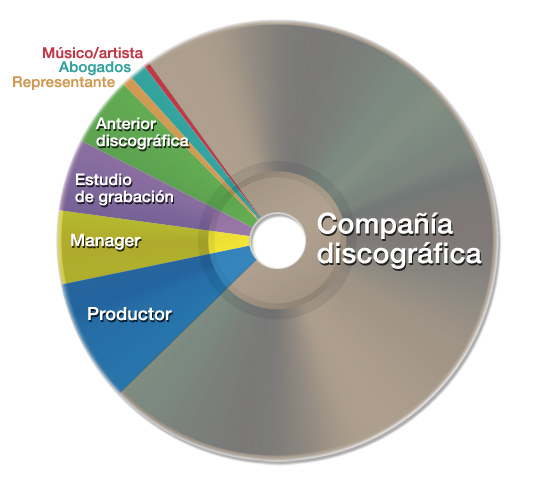
Ciudad Futura the answer is in this graph, showing where the benefits of the average music record goes to:


For those who can't read Spanish, the translation is:
  • Compañía discográfica: music company
  • Procutor: producer
  • Manager: manager
  • Estudio de grabación: recording studio
  • Anterior discográfica: previous music company
  • Representantes: representatives
  • Abogados: attorneys
  • Músico/artista: musician/artist
So draconian anti-piracy laws are hardly justified in the name of the artists' profits. It's really more a matter of vampires'... I mean: corporations' profits. Nothing else.

Hence my fatwa is piracy is good, at least in most cases.

Friday, December 4, 2009

The Great Western Imperial Firewall


Paul Marks writes at New Scientist:

"THIS is the kind of snooping you'd expect in China, not a modern western democracy. It raises huge questions over privacy invasion and freedom of expression." So says Andrew Heaney - who is not, as you might imagine, a civil liberties campaigner, but a senior executive at TalkTalk, one of the UK's largest internet service providers. Along with other ISPs, his company faces the prospect of being forced to spy on its customers' downloads for signs of potential copyright infringement.

>> Read more.

We supposedly enjoy the right to use our property the way we want, we supposedly enjoy the right not to be spied by the authorities without justified judicial intervention... but that does not apply to the Internet. While my phone or snail-mail conversations are protected by the right to privacy, whatever I do in the Internet is considered unprotected and open to be scrutinized by the police without any judicial supervision.

And if I happen to breach their corporativist laws, I won't even have a trial: I will be severely sentenced without any kind of guarantees.

And worst of all is that all their efforts to control intellectual property are futile. People will keep downloading and sharing one way or another, and they won't buy more because they just can't. Some will be punished but essentially piracy will just change its forms without any reduction. If anything people may feel even more justified to infringe copyright at any occasion because the mafioso style of this thought police is so annoying that you can't but choose to punish them whenever you can.

The whole project is going to fail (again). Their attempts to capitalize into even the most marginal sectors is essentially doomed. However it may have a good facet: that it will unavoidably open the debate on one of the central tenets of the late Toyotist capitalism: extremist intellectual property and how it makes impossible to do anything. And this kind of virtual property is the last hold of Capitalism: when we are done with it, this age will be over.

It is a fact that the labyrinth of patents and copyrights is hindering research, that fair use should be standard not any exception - even if just for the sake of science.

Sunday, August 23, 2009

Anti-copyright-madness party growing in Europe


You might have heard of Pirate Bay, a Swedish site dedicated to share all kind of e-stuff with total disregard for the so-called "intellectual property" that has been harshly persecuted recently. Well, people of the same ideas organized a party for the last Euro polls and got a seat with 7.1% of votes in the Scandinavian kingdom.


But the anti-copyright snowball may have just began to roll: some weeks later a German MP deserted the SDP to become the first Pirate member of the Budestag. Now the news is that the brand new British Pirate Party is adding some 100 members per hour to its ranks. Due to economic constrains, they may not be able to run in all districts in the next general elections.

The Pirates want to legalize non-commercial file sharing and cut excessive Internet surveillance, they also want to reform the copyright laws that do not benefit the creators but the corporations.

There are registered or unregistered Pirate Parties in most EU and NATO countries, as well as in Russia, Australia, South Africa, Peru and Chile. I wonder if this crucial issue of who controls the every day more virtual capitalist property is a new fact of the secular Class War. It certainly fits very well within what Toni Negri wrote a couple of decades ago claiming that the crucial struggle nowadays is that for control of the production.


Map showing the countries where there are registered (black) or unregistered (blue) Pirate Parties or where these are being considered (red).

Sources: The Register (links in text) and Wikipedia.
.

Tuesday, August 4, 2009

Transgenic crops forbidden to be researched independently


If somebody tells you or you read somewhere that there are no studies that prove that GMOs (genetically modified organisms, aka transgenics) are harmful in any way, you can simply reply that there are just no independent studies on GMOs.


That is the truth. Why are there not independent studies? According to F. William Engdahl at Global Research, because they are illegal. Why are they illegal? Because researching them without the approval of the company that owns the patent would be a breach of contract.

And that is: Monsanto and the other GMO mafias (oops, I meant respectful corporations) force any customer who buys their seeds to sign a contract that forbids such research in any form.

Tricky, eh?

So basically they create the little frankestein monsters, "research" them at their labs, correct whatever needs to be corrected, and then send those shiny dossiers claiming high performance and zero damage to governments like yours.

The reality is probably much different but it's illegal to investigate.
.

Friday, November 28, 2008

Pharmaceuticals trumping cheap medicines.


The European Comission is
initiating legal action against pharmaceutical companies because they are abusing the patent system, hindering and delaying the adoption of much cheaper generics by health care systems in EU.

I much fear this is another "Microsoft" case, where legal anti-trust action is not going anywhere. I think that those companies should be immediately nationalized and the whole patent/copyright system erased for good. Economy is for the people, not the other way around - but those whimpy little EU comissioners will never understand it. We need to turn things upside down and we need to do it now.

Yah, I am in quite an intransigent mood these days... and proud of it. Whatever the case the Capitalist system is dead, so let's bury it fast before it starts stinking.

Wednesday, September 24, 2008

Patents: a patent abuse and a patent failure


Even
the BBC is echoing the voices that are rising, every day more loudly, against the patent system as we know it.

According to the various scientists pooled by the BBC the current patent system that allows to patent nearly everything, at every stage of developement and even discoveries that are not any invention, is not favoring anymore scientific research, much less the developement of innovative solutions. The case seems clear for genetics (including genomics), where has been created a "fortress" of patentsaround newly discovered genes, closing off avenues of research for their competitors... and for humankind as a whole, specially because it hinders basic research at universities.

European citizens cannot enjoy the benefits of cancer screening for instance because the public health services find its price way too expensive. Genetically modified rice rich in vitamin A that was intended to be freely distributed in countries where this nutrional problem is endemic, find themselves legally unable to do it because of the intricate network of related genetic patents that have to be negotiated. It has taken years just to figure out how many [related] patents there are and who owns them, complains its developer Prof. Gold.

Pat Mooney of ETC Group, protests that the patenting system is not working, it is more a barrier than an incentive. He says that innovation in pharmacology has dropped to nearly null levels, while in nanotechnology the too broad patents have cut off whole areas of research.

But in Spanish too, the voices arising against the current patent system (nearly no one wants to fully scrap off patents, just radically reform the system) are many. There have been several articles recently at Rebelión on this issue.

For example, L.P. Vargas writes an interesting article on the history and modern reform of the patent system. He mentions that, as of late, not just what the human ingenuity has created can be patented but also what someone has merely discovered, for example: the genome. This is not waht the original patent system was created for, it is a most new developement, dated just to 1994: the TRIPS agreement reached at the WTO.

He finds in this treaty two goals: to create informational monopolies (such as could be the one of Microsoft, for instance) to accumulate new wealth, earlier freely available, into private hands and specially those of the multinational corporations.

Still in 1983, for instance, the law of patents of Costa Rica said that medicines would only enjoy exclusive patent for a year. Listening to the corporative speakers, who always complain that they need to make money from research, one wonders how even existed pharmaceutic corporations at all before the agreement of 1994.

Another author, D. Standeford, follows a conference by J. Stiglitz and J. Sulston (founders the Institute for Science, Ethics and Innovation) , who have strongly criticised the current intellectual property system, because it actually hinders innovation, instead of promoting it. In the words of Stiglitz (nobel laureate of Economics in 2001) : the current mess of patents by which any person who developes a succesful software program is used for alleged breach of patent shows that the current system of does not allow to promote innovation.

Another problem is that there are little social benefits with this system and he also mentions the cancer screening system, sold for so much that most people in the USA cannot afford it, in spite of the system itself being extremely cheap to produce and use.

Sulston (nobel laureate of Medicine in 2002) claims that science can be largely motivated by mere curiosity and need but that this needs of a great level of opennes and trust among the agents. He complains that the increased privatization of science and research, so welcomed by corporations and some governments, is only causing it to exclude those research areas that are not considered profitable (like finding a cure for malaria).

Another byproduct of the current draconian patent laws is that falsification of medicines has become very profitable. If medicines would be sold only reasonably above production costs, then the falsifiers would have no margin where to operate, but at the current absurd prices demanded, medicine falsifiers have found a huge market with high profits to make.

Sulston suggests to return to the old practice of separation of research and developement from production. He finds that the hybridation of both only causes corruption in the system. He concludes that the very success of humankind will depend on who owns sience.

Who and whith what purpose controls production is what some Marxists, like Toni Negri, have suggested to be the real battlefield of class war in this Toyotist new phase of Capitalism.

I said before that nearly no one is asking to totally supress the patent system but there are some voices that certainly have arisen in favor of mere expropiation of intellectual property for the sake of humanity and common sense.

This is the case of F. Pena, who demands the expropiation of all food patents with the clear objective of making a healthier humankind now, following the equally humanitarian path of medicines, where too expensive patents have already been legally breached with the same humanitarian goal.

In Negri-style words: if this intellectual property is nothing but the collective production (often not even production, just deduction) of the workers of the world (Humankind by another name) , how can we tolerate that it falls in the greedy hands of the corporative masters, who will use it only for their profit? It is nothing but knowledge (and nothing less than it) what Capital has targeted as the latest frontier of its accumulation process. But, unlike it happened in earlier accumulations, this one is not working altogether: it doesn't help to produce (research) more but less.

In the beginning of this 21st century, when huge problems like global ecology and loss of demand cramp the Capitalist system, it doesn't appear like this system can afford to destroy research that can save the system itself (at least in theory), yet, quite suicidally, the Capital is cutting the grass of free research under its own feet, hampering further developement and delaying much necesary solutions to its problems.

Would I be Paulson, I would certainly think in saving the economy by allowing more and better resarch, instead of giving prizes to the worst bankers of the planet. But all these people have only one master, and certainly this is not the public. I can just imagine that this serious problem will hang around for a while, until, in the midst of other convulsions, one country after another decide to denounce the TRIPS agreement and allow research to return to some normality.