New blogs

Leherensuge was replaced in October 2010 by two new blogs: For what they were... we are and For what we are... they will be. Check them out.
Showing posts with label geopolitics. Show all posts

Thursday, July 15, 2010

Geopolitics of the 21st century: shares of global wealth in 2015


This map represents the share of the World Domestic Product (Purchase Power Parity) in 2015, according to the latest (2010) estimates by the IMF (direct source:
Wikipedia). Countries with less than 1% of WDP(PPP) not shown.


Click to enlarge
(In lighter blue: countries closely allied with the USA)

By 2015 the Chinese GDP(PPP) will be almost as large as that of the USA and China should overcome the USA in this measure before 2018. Another thing is the nominal GDP but this depends a lot of the artificially-set exchange rate of the renminbi (yuan).

By 2015 India will also be the third global power measured in these macroeconomic figures, having displaced Japan but still a long way to go to rank in the 1st tier. Otherwise the list of 19 countries concentrating more than 1% of global wealth is exactly the same as today but the order will have changed somewhat in favor of developing countries, with much higher growth rates and much better resistance so far to the global economic crisis.

In fact the crisis seems to be largely a crisis of the imperial World order: a clear sign of decline of the neo-European imperial system inaugurated some 500 years ago. It is also a sign of decline of the Anglosaxon-dominated industrial global economy of the last 2-3 centuries, a subset of the previous and its apogee.


A century ago...

Besides that, the situation also reminds me of the other great systemic crisis we know well: the one triggered by Germany surpassing Britain in GDP at the beginning of the 20th century, leading to the two World Wars and, eventually, the global hegemony of the USA.

There are many differences, of course, but there are also similitudes.

Some of the differences are that:
  • the main scenario now is not in Europe but in Asia,
  • that the USA (in the role of early 20th century Britain) is not deploying anything like splendid isolation, but rather has a huge imperial system and is the active self-designed paladin of the old world order, encompassing a large list of wealthy and powerful countries, notably Japan and Germany.
  • that nuclear weapons make a world war most unlikely to happen as such
  • that the rising stars have huge numbers of people to feed and keep content (one thing is GDP and another very different one GDP per capita)
  • that China is far from being the militarist power Germany was and favors instead soft power
In my opinion, the comparison is still valid anyhow and has the following "casting":

  • The USA in the role of Britain, the established but declining first global power
  • China in the role of Germany (including Austria-Hungary), the dynamic but somewhat isolated challenger
  • India in the schizophrenic role of both France and, specially, Italy: the third power in the geostrategic scenario: a more modest rising star with high dependence on who controls the seas
  • Russia as herself and the Ottoman Empire: the semi-colonies of Germany (China) which made up somewhat for its lack of overseas territories
It's very approximate but you get the idea, right? Not sure if Japan should play the role of France or what but India and Italy give me much of the same vibe indeed, including the parallel between the Hymalayas and the Alps, as well as the fact that, much like Italy became relevant in parallel to Germany, India has done the same in parallel to China.

Europe definitively seems to have no major role, specially as it's far away from the Asian scenario. The only chance it could have would be through a real political and military union but that is far from happening. That's probably one of the reasons why Europe is being hit so hard in this economic crisis: it has lost some of its strategic relevance and is therefore disposable.

So which are the new Balcans? Obviously the Greater Middle East, including Central Asia. SE Asia could also play such role to some extent but also that of Scandinavia if they are luckier.

The parallel is, admittedly, only valid to some extent but it is still valid.

What really made me think of this parallel is the fact that for the first time in many many decades, the established global power is going to be soon replaced in the macroeconomic realm by someone else, exactly what provoked WWI.


So what?

These macroeconomic figures are no trivial fact: they represent real power much better than any other data. You can have as many recruits as you wish (soldiers, spies, lobbyists, etc.) but in order for them to be effective you have to be able to pay them, train them and specially equip them. Nowadays GDP generally gives a much more real measure of military prowess than number of troops or any other such figure. The same is true in the plane of economic and political influence.

Then... should we expect a WW-III? I hope not and I do not think so (nuclear deterrence). But we should expect localized wars in the line of Afghanistan and Iraq, as well as political instability (coups, revolutions) associated to this global confrontation each day more apparent.

Then is it more like a Cold War II? Yes, I think so. However, the USSR was never in position to really challenge the USA as China is right now. On the other hand, the USSR had a much more solid and exportable ideology China has abandoned in favor of capitalist competition (but consider Nepal, the Indian Maoists and even the Thai Red Shirts). Finally China is being careful of not overspending in the military department, as the USSR did with catastrophic results, as well as not to challenge prematurely the US hegemony and allow the Empire to get stuck itself in its own new editions of the Vietnam War, knowing that it cannot win them and that they'll cost it dearly.

But China also has its own challenges: in order to succeed economically, it must exploit mainly its own population in a phenomenon I call "internal colonialism". This is obviously bound to produce growing discontent, whose unavoidable revolutionary results are by the moment being deferred by means of certain redistribution of the newly acquired national wealth. China also faces major ecological problems, which are partly its own and partly interconnected with the rest of the world, such as global warming. Another problem is their partial dependence of its main rival as market for its products. Additionally, China has some unsolved geostrategic issues, notably securing access to the oil resources, along with the chain of US military bases/allies offshore, specially Taiwan.

Well, interesting and intriguing scenario the one we are heading into, right?

Tuesday, June 15, 2010

Afghanistan's huge mineral riches


A. Montero
at La Otra Economía reports, following a NY Times source, that Afghanistan has been found to have huge, largely undeveloped, mineral wealth, worth more than USD 900 billion.

For what I can see, about half of this value is iron, one of the most aboundant elements on Earth. However others may be less valuable in accountancy terms but more in geostrategical ones, specially now that the BRIC powers are undermining US hegemony.

One of them is niobium, used in steel alloys and high technology applications. Afghan niobium seems to be potentially worth 81 billion. More interestingly, there are only two producers of nionium nowadays: Canada and Brazil... but Brazil produces 90% of it, what makes even more important for the USA and its NATO allies (remember the recent comments of the German ex-President) to control Afghan production of such strategic mineral.

Even maybe more critical may be the various rare earth elements, whose lead producer today (by far) is China. These minerals would be worth 7.4 billion in Afghanistan. These elements are used in a variety of high technology applications.


Evolution of rare earth elements' production (from Wikipedia)

Other major Afghan mineral resources are:
  • Copper (worth 274 billion): relatively common but widely used. It's lead producer is Chile, followed at a distance by Peru, the USA and Indonesia.
  • Cobalt (worth 51 billion): used specially in superalloys suitable for aircraft engines. Currently the main producer is DR Congo, followed at a distance by Zambia, Brazil, Cuba, Canada and Russia.
  • Gold (worth 25 billion): production is quite distributed but lead by South Africa.
  • Molybdenum (worth 24 billion): also used in heat resistent alloys, among other applications. The main producer is the USA, followed by Chile, China and Peru.
Also asbestos, silver, potash, aluminum and lithium are mentioned in the article as highly valuable.

While Afghan authorities seem excited about the huge potential of these resources, the fact that many of them are in unstable guerrilla areas means that they are unlikely to be exploited easily.

However it is clear that these findings provide a further reason for the USA and NATO to remain in Afghanistan indefinitely. Initially it was mostly a campaign to create a strategical base in Central Asia that would threat other powers such as China, Russia, India and Iran, while also providing potential access to Central Asian oil and gas resources (the infamous "pipelinistan" project via Baluchistan), as well as succulent benefits derived from the highly corrupting opium trade which has boomed since the US-led invasion and that Russia has denounced in strong terms recently.

It looks now like the Imperial armies will remain in Afghanistan for long. That is... unless Afghans throw them out.

Saturday, May 22, 2010

USA and Brazil: America's largest nations in collision course


What the latest (un-)diplomatic row on Iran's nuclear program has shown is not just that, as I said earlier, the USA seems dead set to attack Iran no matter what, but that it's also dead set to sabotage everything that Brazil attempts. This was already very clear last year with the coup in Honduras and the de-facto annexation of Colombia, as well as in the most strange case of the US invasion of Haiti on the pretext of the earthquake.

According to Raúl Zibechi (La Haine[es]) this is all part of a growing confrontation between the USA and Brazil for influence in Latin America and around the World and therefore not really unexpected, not even by the Brazilian government.

For Zibechi this confrontation is anyhow centered at the Amazonia region and the control of South Atlantic oil. In other words: the USA aims to control Brazil as it used to do in the past. As reaction Brazil is building up for the unthinkable: a war with the greatest global power ever, a war they cannot afford to happen... or to lose if it does happen.

For that reason the Amazonian military region is seing its manpower doubled, the Army has grown 30% overall and new naval and air equipment is being added to the nation's military. All purchases include clauses of full technological transfer and none of them includes US-made material, but rather Russian or French. The goal is to create a Brazilian national military-industrial complex that does not need to rely too much on foreign imports.

Eventually Brazil will have to get nuclear weapons, of course, if it wants its dissuasive power to be effective. The National Defense Strategy of 2008 clearly speaks of the need to "develop and dominate nuclear technology".

In any case it is not something that affects only this or that party: all Brazilian media is rallying around Lula on these matters and that is because it is a matter of highest national interest that goes beyond classes or political parties.

With a different viewpoint and emphasis on China's and Russia's discreet role on the Teheran agreement, it's worth mentioning Pepe Escobar's opinion at Asia Times Online, where he quotes the Chinese military genius Sun Tzu: Allow your enemy to make his own mistakes, and don't correct them. For Escobar, it is clear that the USA has made a great mistake by sabotaging this agreement so bluntly, what can only harm Washington's power and prestige (even more) and get it confronted with more and more regional powers, not just Brazil but also hyper-strategical and again self-confident Turkey and who knows what else.

Again it seems that, much like Charles V and his son Philip, the US Empire is embroiled, more often than not willingly, in way too many fronts, wasting precious economical resources in a megalomaniac attempt to control the whole World in a self-defeating strategy of total global domination (as defined by Brezinsky and camarilla) that is even more absurd now that it was in the 16th century. Because now we know that total control is plainly impossible, a mere error of imperfect and too arrogant thought.

See also: The geopolitics of today (or 'BRICs are heavy'), for a broader analysis at Leherensuge, and this other analysis by Raúl Zibechi at Voltaire Net, this time in English.

Friday, May 21, 2010

USA seems set to attack Iran


The last few days have left us with a spat of contradictory news on the conflict around Iran and its nuclear ambitions. First Brazil and Turkey managed to strike a deal that was tailored to US demands so far on this matter and which counted with the support of Russia, a key UN security council veto-holding power and a major nuclear power itself. The US reaction however has been very hostile, claiming that they had already reached an agreement with Russia and China on further sanctions, including intercepting ships sailing to/from Iran in search of nuclear fuel or components.


They pretext that the agreement comes six months late and that Iran does not renounce to regular uranium enriching, which it is entitled to by the NPT, but the obvious reasons are that the USA wants to increase and not decrease the tension with Iran, in line with what their Zionist masters (the only nuclear power of the region) demand and, also, that it wants to trample the diplomatic movements of Brazil (already under US factual siege in Latin America), Turkey (becoming too independent for Washington's and Tel Aviv's likes) and Russia.

This new block of sanctions proposed by the USA are all but an open declaration of war, because the bulk of the naval intervention would fall to US/NATO hands, who are the interested party and who have a whole fleet in the area.

If Washington's position prevails (and so far it usually does), we should expect rapid escalation towards open war. While the USA is unlikely to occupy Iran right away (too costly and too likely to backfire), a terrible protracted unequal conflict, similar to the situation that Iraq was subjected to in the 1990s and early 2000s of total blockade, takeover of airspace and calculated bombings, is the most likely outcome. If the fundamentalist regime does not fall to that, then outright war is also within the possibilities but probably at a later moment, just like happened in Iraq under Bush Jr.

At the moment the UN security council is made up mostly of US satellites (UK, France, Austria, Japan, Mexico, Gabon, Nigeria, Uganda, Bosnia-Herzegovina), what makes the possibility of defeating US proposals by regular vote something almost unthinkable. This leaves Russia and China, who have the right of veto, as the key players.

China, maybe more concerned right now on what is happening at its own borders (Kyrgyzstan, Nepal, Thailand, Korea), has not yet said a word. So Russia seems the most crucial player in this standoff. It's not a comfortable position considering how strong are Zionist interests in Russia too but, as of late, Russia has acted with determination and success against Zionist plans in Georgia, is gaining influence in West Asia (Syria, Turkey and of course cornered Iran).

Clinton has said that they had already persuaded Russia and China to back up their new sanctions package but Russia has spoken with ambiguous words backing the Brazil-Turkey bartered deal.

It's difficult to understand all clues in this complex multilateral situation but I'd say that Russia needs to back up Turkey specially, which is clearly sliding away from US influence, and does not want in any case yet another US engineered war in its West Asian backyard. Afghanistan, Iraq and Georgia are already more than enough. I imagine that, unless the USA offers a lot (something like Taiwan), the interest of China is also to back Russia, Iran, Turkey and Brazil in the UN. China, deeply concerned about its own access to West Asian oil resources, does not want more US military buildup in the Persian Gulf.

On the other hand, US attitude is clearly set up for a remake of the Iraq blockade, eventually leading to an outright invasion. This is totally consistent with the invasions of Afghanistan and Iraq, the rallying of friendly Arab dictatorships into its military alliance system and the government change and potential disintegration of Pakistan. Ideally, for the Pentagon and the White House (and of course for AIPAC, J-street and all the Zionist International), all the area should become submissive to the USA (and Israel), furthering the grip not just in Arab/Muslim nationalist ambitions but also on the access to resources of rising star China and setting advanced positions closer to the soft belly of Russia: Central Asia.

Of course, neutralizing the initiative of free-thinker powers such as Brazil and Turkey is also part of the plan. So, in the best case, expect the new deal to be boycotted by the USA and never gain the seal of approval of the UN Security Council, keeping the situation as it is: an active siege of Iran.

References:
· Thierry Meissan, Strategy Shift in the Middle East (Voltaire Net)
· BBC: Iran hit by fresh UN nuclear sanctions threat
· Al Jazeera: Brazil criticises USA over Iran

Thursday, April 8, 2010

Ongoing revolutions in Asia


Surely you have already read/watched/heard about the takeover of Kyrgyzstan by the opposition after some major clashes and of the growing and extremely daring pressure of the
Red Shirts in Thailand, who are in practice taking the capital in defiance of the state of emergency and even stormed Parliament yesterday.

These revolutions are reactions to poverty, nepotism, corruption and autocracy, of course. In the case of Kyrgyzstan, it seems to lack any effective revolutionary project (what may result in further instability), but it is not so clearly the case with the Thai Red Shirts movement.

Whatever the case, what is clear to me is that these revolutions (we'll see if the Red Shirts succeed but it looks rather likely) have geopolitical implications that we cannot ignore (besides our best wishes for dignity, justice and freedom for all): both countries are key US allies in Asia, hosting bases, and both are rather close to China.

In the Thai case, the implications are fairly clear: China supports Cambodia, which in turn supports the Red Shirts movement in a bid to fight from the inside its powerful and authoritarian Thai neighbor. In the Kyrgyz case the situation is slightly more complicated for the presence and interests of Russia, which stands between China and the Western bloc and also has a military base in the impoverished nation. Russia, naturally has denied any influence in the revolt but from the geopolitical viewpoint it cannot be ignored the recent developments in the former USSR region, all favorable to Russia (Georgia war, power shift in Ukraine). So it is difficult to say whether it's China or Russia or both the ones lurking behind the Kyrgyz revolution. In any case, it's not too favorable in principle to US interests, whose only base in Central Asia is precisely in that country.

Geopolitics apart, there is another lesson to be learnt in these revolutions: that a rotten autocratic government is a ripe fruit waiting to fall down, that revolutions can happen and do happen when the conditions are propitious. Whether these revolutions can solve the problems that caused them is another matter but certainly there is no such possibility if the causants of misery and oppression remain in charge.

Sunday, March 7, 2010

Geopolitics of today (or "BRICs are heavy")


I finally made a satisfactory map that reflects as well as possible the imperfect multipolarity of today's geopolitics:

Click to expand

Legend:
  • Red shades: The Empire (dark red: USA and dependencies, bright red: other NATO members, other "central" US allies and their colonies, pink: other important US allies/EU members, stripes: under military occupation).
  • Turquoise: Russia (stripes: under military occupation), Cyan: main allies
  • Blue: China, lighter blue shades: under Chinese influence
  • Orange: India, lighter orange shades: under Indian influence
  • Green: Brazil, light green: other Mercosur countries, dark green: ALBA
  • Dark Grey: other regional powers
  • Regular Grey: other countries
Notice that I could not mark all US/NATO allies on risk of almost all the map becoming pink and that way maybe exaggerating the influence of The Empire even more. On the other hand I may have maxed the areas of influence of China (excepting Pakistan) and India. Many countries, of course, play multilateral diplomacy and try to keep a pretense of independence, what makes more difficult to decide what side are they in. The use of similar colors for Brazil/Mercosur and ALBA is somewhat justified but was mostly chosen to underline the differences between the USA/NATO bloc and the "Latin-Americanist" powers in the American continent. Anyhow, the latest developments in Honduras, Colombia and Haiti have clearly pushed Venezuela and Brazil closer in a joint bid to support the independence of Latin American and Caribbean nations, which obviously plays in their interest rather than in that of the USA, as imperialist power.


Overview:

There are two basic elements in the reality reflected in this map: The Empire and the BRIC.

The Empire is incredibly large (even if I tended to reflect only its strongest influence) and is clearly based on naval hegemony, which is supported by proportionally large navies, not just from the USA but also from France, UK, Italy, Spain, Australia and Japan in particular.

BRIC is an acronym that stands for Brazil, Russia, India and China. Even if it's an informal group, it has no other entity that reflect the four major powers that are still independent from The Empire. Each one of them has its own geostrategical interests and also different cultures and political systems. The only thing in common they may have is that they all are more or less confronted with The Empire... with one exception: India.


India:

It seems that India and China perceive each other as most direct rivals. Also India has a large maritime facade and hence clear naval interests in the Indian Ocean specially, which is also the ocean where The Empire has an arguably weaker presence. However India has with good reason distrusted The Empire in the past and instead kept stronger ties with the former USSR. The China-USA entente and the conflicts with Pakistan (an ally of both USA and China) on Kashmir, led the South Asian republic to act that way. However it has played both sides and has always kept major ties with Israel and other members of the Western bloc.

In the current circumstances, India still keeps good relations with Russia but the approach between Moscow and Beijing is pushing the old friend somewhat apart and throwing India in the arms of The Empire.


China and Russia:

But, of course, the most important power of all BRIC countries is nowadays China. And it is the growing conflict between China and the USA what really describes the scene. We can't still talk of a new Cold War, very specially because the Chinese take due care in no pushing the conflict to military but economic and diplomatic terms but, in any case, the conflict is clear and growing stronger, as knows anyone who reads the news.

China however is relatively weak in the military aspect, even if less so than in the past, and hence its growing alliance with the decadent but heavily armed Russia is of crucial importance. The "thirdworldized" Russia with loads of ICBM nukes, offers China an almost ideal ally: China does not dispute Russia its political and military clout on Central Asia but rips many of the economic benefits, not just of Central Asia but also of Siberia. It also offers China a military shield that prevents a direct conflict with The Empire.

On its side Russia also feels threatened by The Empire, which has been growing towards its borders and even threatens it with new missile deployments. The latest developments (defeat of Georgia, pro-Russian government in Ukraine, restive Turkey) may imply that Russia is scoring some goals but still it does feel threatened by NATO and siding with China is the best alternative it has (as together they control most of non-tropical Asia, while divided they would only play in the hands of their common rival).

China's worries are mostly a fear of being blockaded out of the oil supplies from the Middle East. Hence it's following two parallel strategies: on one side, cooperation with Russia to keep The Empire out of Central Asia (and as much as possible of The Middle East as well, for example protecting Iran) and, on the other side, securing as much as possible the shipping lines to West Asia (for which it has recently obtained bases in Bangladesh and Sri-Lanka).

In parallel, China is painfully working to weaken the imperial bloc in its immediate area of East Asia itself (seducing South Korea and even Japan and Taiwan as much as possible, supporting little Cambodia against Thailand, etc.), as well as gaining random friends in Polynesia and Africa and, specially, making business even where The Empire makes military alliances.


Brazil:

The other BRIC power is Brazil, whose confrontation with the USA has been growing hot in the last year. Brazil has been playing, even more than China, a soft diplomatic game, gradually strengthening its position both internally and internationally. While it has got its bad moments with the Bolivarian bloc led by Venezuela, the crisis of Honduras seems to have eventually opened its eyes. And if that did not, the growing US military presence in Colombia and the unbelievable massive invasion of Haiti have put things clear for Brazil: there's no room for two powers in America... unless they fight each other. Surely Brazil would like to grow in power more gradually and without conflicts but it seems that those days are now gone and The Empire is striking back. That situation obviously pushes the Bolivarian bloc (the ALBA) and the Brazilian-led bloc (Mercosur) into each other's arms.

The latest growing tensions around the Falklands/Malvinas disputed archipelago, as well as the repeated protests of Venezuela against the US-Colombia-Netherlands siege, show that the issue is serious.

However Brazil in comparison with the Asian BRIC countries has three disadvantages:
  • Like India, it is a naval oriented country with a large maritime facade. Hence it's potentially more exposed to the Imperial naval hegemony. But, unlike India it's much closer to the USA and its area of immediate interests.
  • It competes with the largest global power for Latin America, which the USA still considers its "backyard".
  • It is the only BRIC power that has no nuclear weapons. It might develop them (as did India not long ago) but that would mean breaching international agreements (NPT) and giving hence a pretext to the USA to behave even more aggressively.
On the other hand it has some major advantages:
  • Latin America in general is fed up with the USA and is clearly willing to try something new. Brazil has the potential of playing a leading role in this aspect and the recent formation of a distinct Latin American and Caribbean association without the USA nor Spain is a clear step in this direction.
  • Not only Latin America but eventually even large parts of Africa, very specially South Africa (particularly sympathetic to Brazil and India, and leader of a large bloc, not represented in the map) and the former Portuguese colonies, could be interested in some sort of cooperation with Brazil and other Latin American nations with common goals of emancipation and development.
  • The legitimacy of the people: unlike the other US rivals (China and Russia) and unlike most US allies (vassals) in the region, Brazil and its allies (excepting Cuba) are clear democracies, with more or less "progressive" leaning. Machiavelli himself would applaud that as a great asset.
  • Oil: Venezuela seems to have become the largest oil reserve in the World, replacing Saudi Arabia in this position. Brazil itself has discovered large deposits offshore and there are others in Cuba, Haiti and the Falklands, fueling the confrontation with the USA and Britain. But also allowing for some decent bargaining as well.

The Empire:

The Imperial bloc lead by the USA has clear advantages: the largest share by far of the global GDP, a huge military, presence almost anywhere on Earth, lots of nukes, total naval hegemony... But it has also some disadvantages, namely: overextension, huge debt (largely caused by military overexpending), being dominated by a small oligarchy with very peculiar interests, often conflicting with those of the people and even The Empire itself (particularly Zionism), and now a brutal overproduction crisis that might well seal its fate once for all.

Overgrowth crisis are not alien to large empires. Rome itself faced one after consolidation and languished for centuries in it, while the British Empire decayed largely because it was too large to be defended against its own peoples. But the closest parallel is surely the Habsburgian Empire of Charles V and Philip II, who similarly were forced to overexpend in military adventures, often ill fated, almost everywhere (Germany, the Mediterranean, Britain...). At the time there was no larger empire and the Habsburgs thought they had no rival... but soon they had to experience a harsh reality check and declare bankrupticy, as well as making huge concessions to their rivals.

This is in fact what The Empire is facing today: the crisis is, as we all know, far from over and it is affecting severely both major pillars of the bloc: the USA and EU. It is primarily an structural overproduction crisis but it's also a debt crisis (with China getting rid of less and less solid US bonds) and an overextension crisis as well.

Just count the unfinished major wars The Empire is involved in: Palestine, Iraq, Afghanistan, Colombia-plus, Yemen, Somalia. Not to mention the never accoplished threat of attacking Iran, the extreme instability of most US vassals in Latin America (Colombia, Mexico, Honduras and poor occupied Haiti at least), which can any day turn against their master by popular acclamation, and those of other regions (Egypt, Morocco, Pakistan, Thailand and even some European countries like Greece).

And then count the cost: the nominal US public debt is of almost 8 trillion USD but, in fact, more than 5 trillion are excluded from these accounts. Only counting the nominal fraction, the US public debt has never been so high since the late 1950s (as percentage of GDP, c. 70%) and, when we count all the real debt, it's as high as at the height of WWII (again as percentage of GDP, c. 115%). This kind of heavy indebtment, paid with the booty of conquest maybe but not without serious economic implications, is again another striking parallel with the Habsburgian Empire of Charles V and successors, very specially as most of it is wasted in both cases in military expenses.

But, of course, The Empire remains as of today as a mighty power, the only real superpower on Earth. Meanwhile, the Frances, Englands and Ottoman Empires of our day (the BRIC and particularly China) bid their time as much as they can avoiding direct confrontation as much as possible.

And this is the scenario we have now. Though admittedly it may well be obsolete in a decade or less.


Addendum: naval might:

Aircraft carriers may well reflect with some approximation the real naval might of each of the powers at play. They are as follows:

NATO and allies:
  • USA: 11 ships in use, 1 projected
  • Britain: 2 ships in use, 2 projected
  • Italy: 2 ships in use
  • Spain: 2 ships in use
  • France: 1 ship in use
  • Australia: 2 ships projected
  • Japan: 2 ships projected
  • Thailand: 1 ship projected
Total Empire: 18 aircraft carriers in use, 9 projected

BRIC:
  • India: 1 ship in use, 2 projected
  • Russia: 1 ship in use
  • Brazil: 1 ship in use
  • China: 1 ship projected
Total BRIC: 3 aircraft carriers in use, 4 projected


Sources: most data freely adapted from diverse Wikipedia articles and maps. See also this post on the China-US competition, this one on the latest US invasion of Haiti and its geostrategical implications and maybe this one on how Venezuela is being surrounded by US military deployment.

Note: of course, the secondary title is a silly wordplay with the superb record of L7, Bricks Are Heavy.

Thursday, February 4, 2010

Haití kidnapped (again)


A very complex subject but full of evil. That's surely why I haven't felt like writing much on it yet. But also felt I had to... so I'm finally on it.


A brief historical review

As A. Montero mentioned the other day at La otra economía, based on E. Galeano's historian work, the Western powers never forgave Haití that it dared to break its chains. Then France imposed a debt for such pride and Haití swallowed in exchange of recognition. The debt soon ended in US hands that used it to squeeze further the country that first abolished slavery. But the USA took 60 years to recognize the second independent country of America: slavery and racism were too high in its agenda, as well as its own form of imperialism.

It took Haití 124 years to pay off that debt that never contracted. By then the whole country belonged to the US banks.

But, even Simón Bolívar, who owed so much to the Caribbean nation, where he found refuge in the low times of his rebellion, where he was given weapons, ships and even soldiers, the very blood of the country. When he succeeded he didn't recognize Haití either. He formally abolished slavery as promised but no other sign of recognition to Haití.

Racism was incredibly powerful these days, it seems.


The last decades

But well, let's get to a more recent Haití. Some 20 years ago I was on holiday in New York and had the opportunity of taking part in a huge demonstration in support of democracy for Haití, which had been suppressed by a violent coup promoted by George Bush Sr. I still have over there a pin with the Haitian banner and the simple slogan: Free Haití.

Per the promise of Bill Clinton, Aristide went back to power... only to be forced to give the presidential band a few months later. But he was elected again four years later and George Bush Jr. meddled, in agreement with France, to cause a pretext of violence and propaganda of corruption, to invade the country with the UN blessings.

Aristide, the only popular president in a century or so, was kidnapped by the blue berets and sent to Central Africa. He's now in South Africa and has shown desire to return.

For many years now, Haití has been an odd international protectorate, as if the country could not rule itself. It could of course but not to the like of Washington nor Paris.


Earthquake and invasion

A few weeks ago we were all shaken by the tragic news of an earthquake in Haití. Not anywhere in Haití but right near the capital, destroying suddenly all the state's and UN's central infrastructure. Not the US embassy though: newly built with the most modern anti-sysmic technology.

But lucky Haitians... the US Southern Command was precisely at that moment making a drill on a hypothetical hurricane devastating Haití. The American friend was ready and in a few days they invaded the country again. All for the good of the Haitians, of course.

Since then everything is under control... or so we are told. We know little of what is really going on anymore, as journalists are not able to report properly. For security reasons, of course. Just like in Iraq... or in Gaza... The cold and totalitarian militarist logic has replaced the warm and frank logic of solidarity.

Just that nobody has reported feeling threatened... before the marines landed. So what the heck?!

Why is the USA invading Haití again? Guess that there are many reasons...


Economic reasons

Haití is practically owned by multinational corporations, mostly based on the USA, as well as by a tiny oligarchy that owns most of the land. The country has many mineral but ill-exploited resources and, crucially, there seems to be a huge oil reserve between Haití and Cuba, only recently discovered, and particularly extending under the soil of Port-au-Prince.

Hmmm... curious. How handy that the capital has been devastated providing an excuse to deport all or most of its inhabitants.

Maybe Thierry Meyssan is correct when claiming that the earthquake was not natural but the product of an ill-known but way too real type of weapons that cause earthquakes he may be onto something. Yah, "conspiration theories" sure... but you being paranoid doesn't mean that they are not after you anyhow. And such weapons do exist and the circumstances are too suggestive of criminal action.


Geostrategic reasons

It is well known that the Caribbean Sea is the gate of America. All European powers but Portugal accessed that way, the pirate wars, the US-Spain war of 1898 and the several military interventions of the USA in the area since then are clear signs of the importance of this sea and its islands. The largest of them, Cuba, has managed to stay independent, not without a fight that continues nowadays... but the rest barely so. Some are still in fact colonies of European powers or the USA.

And Haití is the most battered of all, maybe because it's just east of Cuba and the infamous Guantanamo base, too close to some key straits that have been central since the age of piracy. The infamous Tortuga island is of course in Haití, not far from the Windward Passage, which was one of the main sceneries of the piratical actions sponsored by France, Britain and the Netherlands against the Spanish Empire and particularly Cuba. Today the same cold strategic logic applies but the enemy is not a powerful colonial empire but some of its former colonies, Cuba of course but also Venezuela and others.

But there may be more. The only country that can dream of shadowing the USA some day in America is Brazil, a power of growing international importance, which has been playing very diplomatically but has been recently pushed to some confrontation by the US actions in Honduras and Colombia. Brazil was in charge of the UN force in Haití... until the earthquake.

And even more. Anybody who has been a minimally serious Diplomacy player can easily recognize that in the increasing global polarization centered in Washington and Beijing, Brazil is a natural ally of China, as it's not easy that the two will compete, while the competition between the USA and Brazil is almost a given. Of course diplomatists would contest that nothing is set on stone and that's why the game is called Diplomacy. But I'd say that the current scenery has been one of increased confrontation.

This is maybe because the Bush presidency was so extremely focused on the Middle East and Central Asia that ignored Latin America to some extent. Instead the Obama term seems to be more and more focused on a global aggressive policy in all fronts, with a clear focus on Latin America and also, it seems now, in increasing tensions with China.

As per above, the two things may not be really detached. But neither was the focus on Central and West Asia, though China has managed to land on its four on the very countries that the US aimed to control (see my previous post on this issue), while Bush was not too interested in directly increasing tensions with the Asian giant, that he perceived as too important for the US economy. Some say that the influece of Zbigniew Brzezinski's thought is too strong in the Democrat aparatchkik for anything else than pursuit of total global domination.

And Haití happens to be in the middle, to want to improve their situation democratically after many decades of brutal dictatorship by US-sponsored tyrants, to have oil, and to be so lucky, as to have the US Navy ready to invade it, for humanitarian reasons, of course, when the earthquake happened.

But there are other natural forces in Haiti, like the force of the water that in Creole is called Lavalas, avalanche.

Yankees, go home!


Further reading:
- Rebelión on Haití (in Spanish).
- Voltaire Net on Haití.
- Global Research on Haití.

Saturday, May 30, 2009

New trends in the Middle East


A couple of spy stories today at the news. One is placed at Balochistan (and affects Iran and Pakistan) and the other at Lebanon (but has Israel as main affected).


Balochistan.

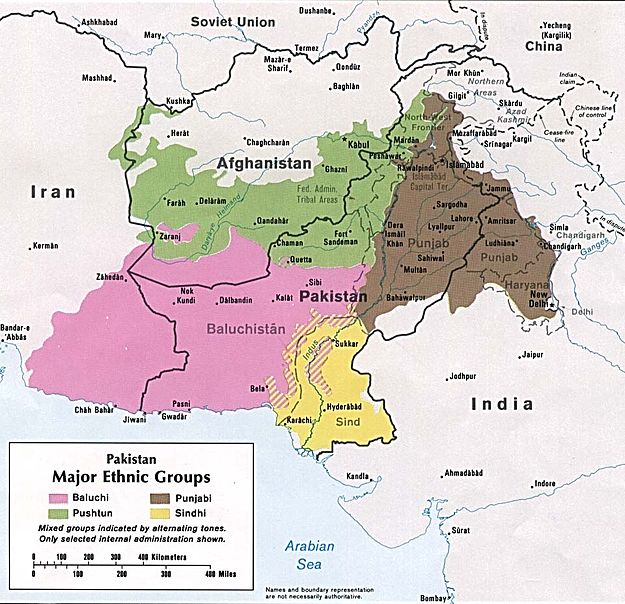
Let's first see what happens in Balochistan. This country is divided between Iran and Pakistan. The Balochis are a distinct people speaking a distinct language but was not lucky in historical destiny and ended up split between the British and Persian empires. It is recognized as stateless by the UNPO (an popular parallel of the UN founded on ethnicities, not states).


Map (from Wikipedia) showing the main nations of Pakistan. Balochis are in pink.

The news is, as you may know, that two successive attacks have taken place in Western Balochistan (Balochistan-Sistan province of Iran): a mass-murdering bomb against a Shia temple, attributed to US agents by the Iranians, followed by a suicidal attack with automatic guns against an electoral office of Iran's President, M. Ahmadinejad. Both took place at Zahedan, a Balochi city which is capital of the province, placed just near the Pakistani and Afghan border.

It is interesting maybe the claim by Iran that US spies have been behind these attacks, even if they sound to the usual propaganda on first sight. This is because of the analysis that Pepe Escobar have been making at Asia Times Online on the US interests in this country. According to him, the USA may well be demolishing Pakistan and wants an independent Balochistan to become its main regional hub, notably for the gasoduct leading, via Afghanistan into Central Asian riches.

If so, the USA might well be targeting not only Eastern "Pakistani" Balochistan but also Western "Iranian" one, adding this nation to the several that are being used (add Kurds and Iranian Arabs) to weaken, and maybe break to pieces, literally, the troublesome fundamentalist Iran.


Lebanon smashes Zionist spy network.

In an apparently distinct development, the Lebanese armed forces have been these days arresting more than 40 alleged spies of Israel, which would belong to at least a dozen different networks. These do not belong to any specific faction or faith, and Israel has not denied its implication, so it does seem it is for real and not just a political campaign. The operation is still ongoing and it seems that it could include top political figures as well.

This may well have destroyed all or most of the Zionist ability to spy and interfere in Lebanon: it is a huge blow to Israel. This kind of large network needs many years, maybe decades, to be built and its annihilation certainly makes Israel significatively less powerful.

Lebanese authorities claim that the operation was possible because of a "technological breakthrough". Or in other words: they or someone else has probably broken into the Zionist headquarters' computers and accessed top secret data - not just a piece but all or nearly so (and probably not just limited to Lebanon operations - we will surely read more on Mossad networks elsewhere soon, I guess).

The question is: who has managed to do such a feat? Probably not Lebanon itself, not Hizbollah either. Nor it's likely an achievement of Syria or Iran, much less besieged Hamas. Who then? Two main candidates seem more obvious: Russia and China. Both have advanced technology and both could have interest in undermining US influence in the area (and hence Israel's). Russia is probably still angered at Israel messing in Georgia, while China has wide and growing interests in the Middle East, that clash with those of the USA and Israel.

But Russia is as dominated by a pro-Zionist oligarchy as it is the USA and China has in the past benefited from the manipulative games of Israel, which sold Patriot anti-missile technology to Beijing not so long ago. This does not exclude them totally but certainly opens the array of options.

I have at least two other candidates and they are surprising ones: the USA and France. Sounds unlikely but the USA might have taken seriously the "two states solution" and may be upset at Netanyahu's and other Zionists' maneouvers, including the current rejection to stop expansion of settlements in the West Bank or the "treacherous" genocidal campaign against Gaza in the presidential interlude some months ago, which may have irked even people within the Zionist mafia itself (as have only caused increased opposition and awareness against Israel).

France is even more unlikely, notably with Sarkozy (of Jewish ancestors himself) taking such an outstanding pro-Zionist stand as of late. But things are not always what they appear and France has recently shown increased interest in West Asia (where Lebanon and Syria are their "natural" allies).

There are even more potential candidates: Latin American nations like Venezuela or Bolivia (who are tired of fascist-zionist attacks on their soil), Turkey (whose regional policy has been once and again undermined by the Wahsington-Tel Aviv tandem), Pakistan (why not? reasons they do have), North Korea, Saudi Arabia (most unlikely, IMO) and even Qatar (main "pro-democracy" player in the Arab League).

It is a most intriguing story and I guess we will soon know, at least by rumor, who is most likely behind this attack against Israel as regional power - and maybe even why.
.

Saturday, September 20, 2008

Narcotraffic centered in the USA and US protectorates


Interesting
article at Rebelión by P. Siris (in Spanish). The author, based on figures of the UN office on Drugs and Crime, notices that USA is by large the greatest consumer of cocaine (45% of the world total) and also a major producer of illegal drugs like marihuana (20% of the world's total, using more land than for maize).

Even more significatively, Siris notices that the number of drug seizures in the North American country has dropped massively in the last decade and now only ammounts to 24% of the world's total, very low considering the huge relevance of the USA as drugs' consumer.
Furthermore, the vast majority of world's cocaine production (60%) happens in Colombia, a US protectorate (and certainly not in jungle areas controlled by the guerrilla), while almost all global opiate production is in Afghanistan (96%) , another US occupied country.

Nevertheless, the USA dares to patronize countries like Bolivia, Venezuela and Myanmar (Bolivia and Myanmar are secondary producers of coca and opium respectively, Venezuela is not any major producer of anything) on this issue, while ignoring the Colombia, Peru (second global producer of coca and cocaine) and Afghanistan, as well as other major hubs of drug trafficking like Pakistan, Iran, Turkey, the European Union and the very United States.


Siris argues that
the USA is not just the largest drug consumer of the world but that it also controls the production of most of these substances and is the benefitiary of the benefit in the narcotraffic business.

Wednesday, August 27, 2008

Geostrategy and Georgia


From the Center for Research on Globalization, a very interesting read:
The Eurasian Corridor: Pipeline Geopolitics and the New Cold War, by Michel Chossudovsky.

It deals with which are the geopolitical stakes at the war of Osetia. Specially on what is the USA trying to secure in that area with the Silk Road Strategy. More than just the Caucasus what is being fought there (and in Afghanistan and probably in Iraq too) is Central Asia, maybe a secondary interest for the USA but a major one for Russia and China, its main rivals.

While Russian oil and gas is theirs, at least by the moment, that is not so clear with regards to Central Asian resources. Additionally all the area affected y the SRS (Urkaine, southern Caucasus and Central Asia) are weak spots for Russia, too tempting to let them fall to the traditional and now renewed geostrategical rival.

All this is splashed of pipelines, geostrategical energy routes built even in the narrow access of Israel to the Red Sea, and the diplomacy and military maneouvres associated with them remind too much to the pre-WWI Baghdad railroad maneouvres, as well as the old imperial tensions between Russia and the, now translated, British Empire in Central Asia too.

By the way, at the same site, you can also find a somewhat different opinion by Ellen Brown, who thinks that the war of Osetia has been engineered to create a smoke curtain to the deep economical crisis. In one thing at least she is right: Saakashvili would not have begun that war, that he could only expect to lose, unless he had orders from Washington D.C.